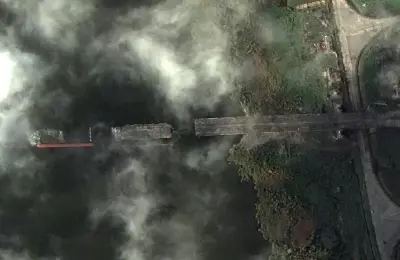
Here’s one example: an authentic broadcast image from the 2026 World Cup in which a fan was replaced by an Adolf Hitler lookalike. Of course, the image was actually created using an OpenAI-powered tool. So how can you spot AI-generated images?
DW Fact check offers tips to help you navigate today's information landscape. You may remember the story of a Syrian teenager who helped stop a knife attack in the German city of Hamburg in 2025. As the story spread, conflicting accounts of the incident emerged on social media, along with AI-generated images like the one above.
The image looks authentic at first glance, but if you zoom in and examine it carefully, you’ll find obvious inconsistencies. That's why it's important to take your time and inspect the details. Common AI errors might be hidden in the background, including distorted objects and gibberish-filled text.
If your device doesn't allow you to zoom in far enough, online tools can help. A tool we often use at DW Fact check is Forensically, a free online photo forensics platform that includes a magnifier and other features for examining images closely. Remember the Hitler lookalike from above?
A supporter resembling the Nazi dictator would almost certainly have attracted immediate attention from broadcasters, stadium officials and other spectators. To view this video please enable JavaScript, and consider upgrading to a web browser that supports HTML5 video Yet no reputable media organizations reported such a stir, and no fans in the stadium shared posts showing the lookalike from a different perspective. This example highlights a key verification technique: move beyond the pixels and ask yourself whether the event itself makes sense.
One way of doing that is checking whether the apparent event has been covered by trustworthy news organizations. If an image appears to show a highly unusual or controversial incident, but there is no evidence of it in credible reporting, that should raise a red flag. You can also look at who’s posting and sharing the image.
Extract — continue reading at the source.