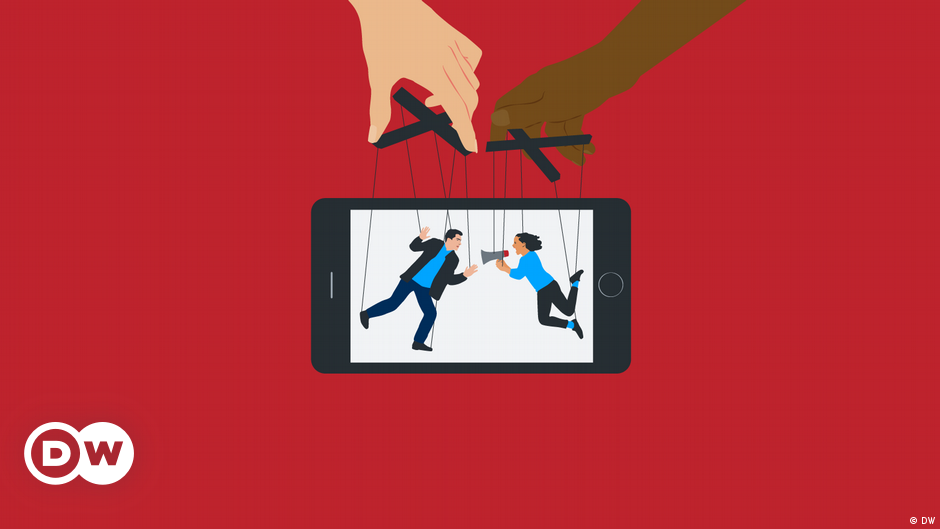
The 2026 US-Iran war was not just fought on the battlefield, but also across social media. AI-generated animations inspired by "The Lego Movie" showcased Iran's military power, while another animated video depicted a supersized version of US Vice President JD Vance rampaging through Tehran like Godzilla. Accounts sharing this kind of content have amassed millions of views and offer a powerful example of propaganda in the age of artificial intelligence.
They also illustrate how propaganda, while far from a new phenomenon, continues to evolve alongside technology. DW Fact check offers tips to help you navigate today's information landscape. Propaganda is often described as the deliberate use of information by governments, politicians and other actors to shape people’s beliefs, attitudes or behavior.
It relies on the selective presentation of information, emphasizing certain facts while omitting or misrepresenting others. Propaganda is not only deployed by authoritarian countries like Russia, China and North Korea; it can be found all over the world. A key difference between systems is that propaganda in authoritarian states is often heavily centralized and tightly controlled.
In democratic societies, propaganda is often more pluralistic, produced by a wider range of actors. Moreover, freely accessing alternative media outlets and information is far more straightforward in democracies. Talking to DW, Piers Robinson, a political scientist with the Organisation for Propaganda Studies, said propaganda can persuade someone to act or behave in a particular way.
He cited the example of how US politicians worked to convince the public to support the 2003 invasion of Iraq. "In that case, famously, they exaggerated intelligence about weapons of mass destruction to make Iraq appear a bigger threat than it really was," said Robinson. No weapons of mass destruction were ever found in the country.
Images presented by the CIA purporting to prove their existence constituted misinformation deployed for propaganda purposes. The Iraq War demonstrates another key aim of propaganda: vilifying political opponents, rival countries, or cultures or values seen as undesirable or threatening. US President Donald Trumpis a case in point.
Extract — continue reading at the source.


