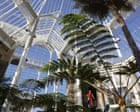
In the early autumn sunlight, Royal Botanic Garden Edinburgh’s extensive plant collection appears safe in their glass enclosures. But danger lurks from above for the tropical ferns, cycads and rare alpine heathers. Soon the September sunshine will give way to the storms and gales of the Scottish winter, which can bring hundreds of glass panels crashing to the greenhouse floor on the windiest days.
Nobody is allowed inside when the wind is above 30mph. It’s traumatic for those of us who put decades into caring for these plants. A storm can literally just wipe them out.” But this week, change is in the air for the creaking infrastructure at the 356-year-old botanic garden, the second oldest in Britain after Oxford.
On Friday, the palm houses are reopening after five years of painstaking restoration work, complete with 5,750 panels of toughened glass to keep out the elements. Before they closed for renovation works, the horticultural team had installed a net in case panels fell from the weathered structure. The new ones are not bulletproof – but they are strong enough to resist a bird strike.
Part-Georgian, part-Victorian, the £23.5m refurbishment has kept nearly all of the original sandstone and wrought iron shell. Inside, more than 600 temperate plants have returned to the building. The air is clean and crisp, purified by ferns that naturally remove toxins from the air.
Its temperature and humidity is still controlled by the original pulleys and winches. She points out her favourite tree fern, which comes from Tasmania and has a Scottish liverwort growing on its woody stem. Founded by two physicians in 1670 to teach doctors about medicinal plants, RBGE has morphed into one of the most important collections of plant biodiversity in the world.
Its research glasshouses are stuffed with rare ginger species, bananas, blueberries and dozens of begonias. It is a global authority on rhododendrons and ferns, houses rare plant species that have gone extinct in the wild, and its scientists have helped pioneer new technology, such as DNA barcoding which is used to identify plant species. Arthur Conan Doyle studied here, infusing Sherlock Holmes novels with his botanical knowledge.
Extract — continue reading at the source.