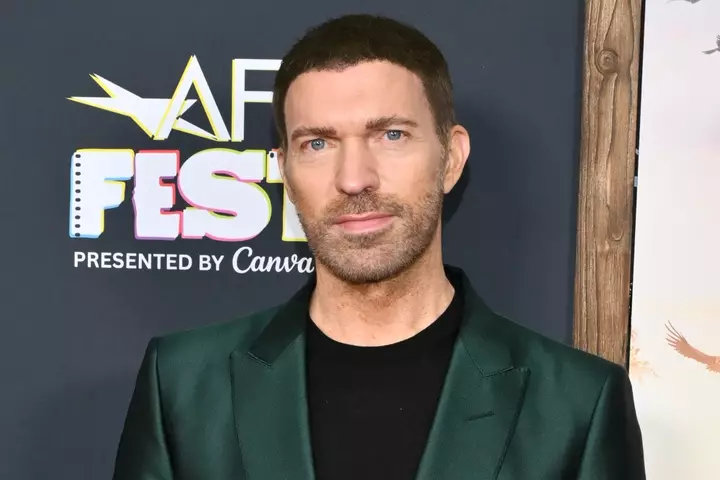
Watch the trailer for the timely documentary below Timely documentary “Father Father” — premiering at Festival do Rio — follows a Jewish Israeli named Aviv and Khader, his Palestinian-Israeli husband, as they travel to Texas where a surrogate delivers their baby, Albi, on the eve of Hamas’ Oct. 7 attack. Directed by British documentarian Jake Witzenfeld — who in 2015 made a splash with “Oriented,” following three Palestinian gay men in Tel Aviv during the lead-up to the 2014 Israel–Gaza conflict — “Father Father” is an intensely personal love story that clashes with the horrors caused by politics and war. Inevitably, this puts a strain on Aviv and Khader’s relationship, but ultimately doesn’t break their dream of forming a family.
There was obviously the seed of something from a storytelling perspective. At the time, I was living in London and was working on a range of different projects. But I was able to kind of cobble together enough development money to start following the process, without committing to any outcome of where it was going.
My instinct was that it felt like an interesting time to start looking at the future of a Muslim and a Jewish mixed gay couple in Tel Aviv. Bibi [Benjamin Netanyahu] was soon to be voted out. He was kind of hanging on in 2021.
There was a period where he was out of power for about nine months. Then he came back in, and we started making the film in that context. That’s really the origin of it.
Initially, it didn’t have a clear direction. It was an exploratory piece about about their ability to do this inside the country. Then, once Bibi came back — and the government skewed extremely to the right — the film took on this kind of macro context of whether they could hang in there and fight.
To me, it’s one of the most fascinating moments in the film. It shows the complexity of the state of Israel — a country that undeniably has a broad range of liberal freedoms that are in negotiation with the nature of the state as Jewish — and I think that moment is kind of absurd. That a gay mixed [Israeli/Palestinian] couple can go sit there, be offered coffee, shake hands, no one feels threatened, everything’s cool.
Extract — continue reading at the source.