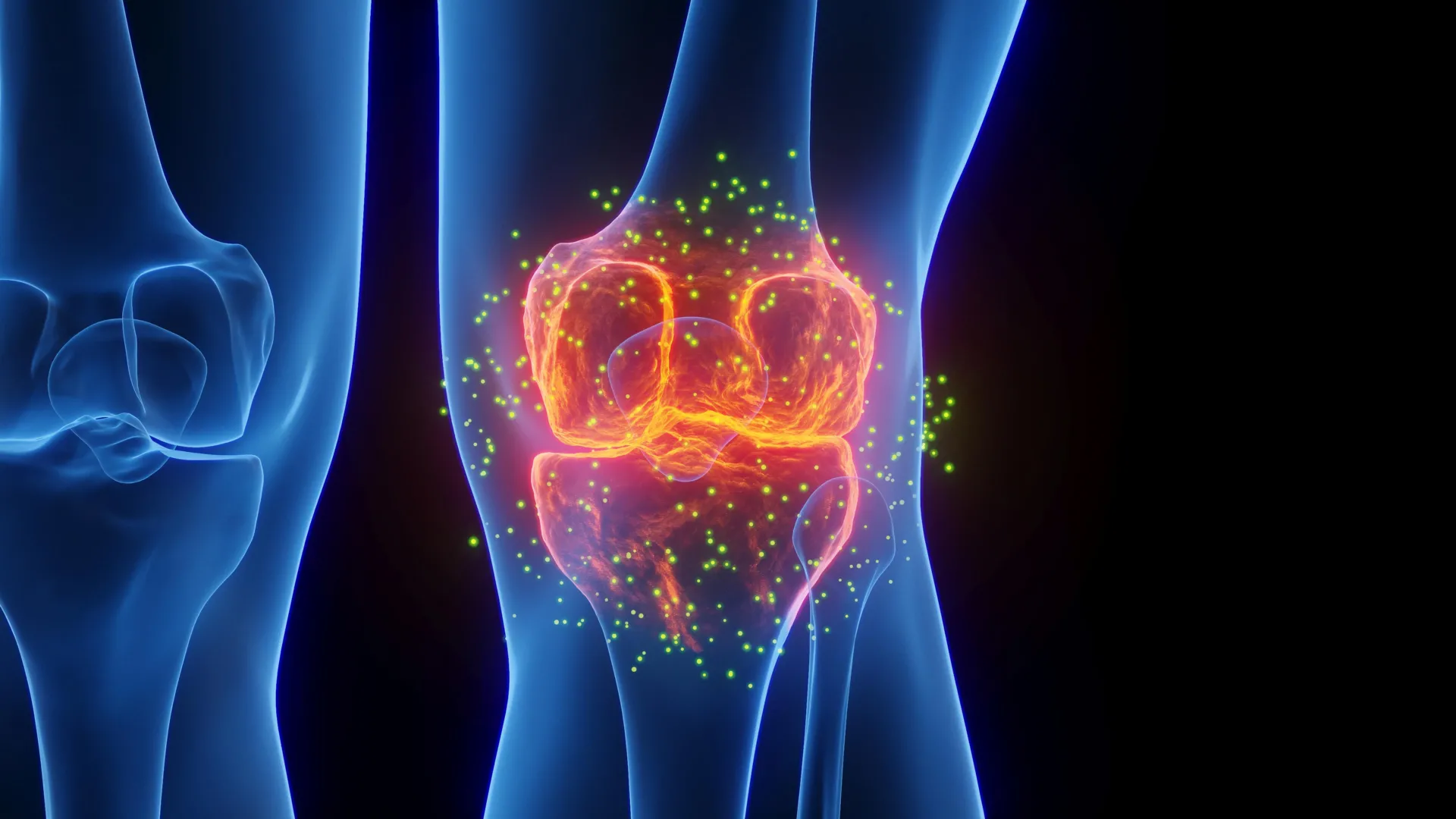
For millions of people with osteoarthritis, pain and stiffness can make everyday activities increasingly difficult. Common treatments, including over-the-counter medications and steroid injections, may reduce symptoms for a time, but they do not prevent the underlying joint damage from progressing. New research from Yale suggests a different approach.
In a study published in Bioactive Materials, scientists found that the medication lacosamide can serve two purposes in osteoarthritis, reducing joint pain while also reversing cartilage damage. The effects were particularly strong when the drug was delivered directly into the joint using a specialized hydrogel. Osteoarthritis is often called a condition caused by wear and tear, but that description leaves out much of the biology involved.
Within a healthy joint, cells known as chondrocytes help maintain cartilage by continuously balancing the creation of new tissue with the removal of old material. Osteoarthritis disrupts that balance. Cartilage begins to break down faster than it can be replaced, eventually allowing bones to rub against one another.
As the disease advances, some patients may ultimately require joint reconstruction procedures such as a total knee replacement. "There is a major unmet need in osteoarthritis," says the study's principal investigator and Charles W. Ohse Professor of Orthopaedics & Rehabilitation, Chuan-Ju Liu, PhD.
"We need therapies that don't just mask pain but actually change how the disease progresses." At present, no medicine approved by the U.S. Food and Drug Administration can both stop osteoarthritis pain and prevent the structural breakdown of cartilage. The work led by Liu suggests that it may be possible to address both problems with a single therapeutic strategy.
The researchers repurposed an existing medication and paired it with an advanced gel designed to keep the drug inside the joint. The approach could potentially preserve joint tissue while delivering sustained pain relief without relying on addictive opioids. A protein linked to pain and cartilage loss The research focuses on Nav1.7, a protein that functions as a sodium channel.
Extract — continue reading at the source.


