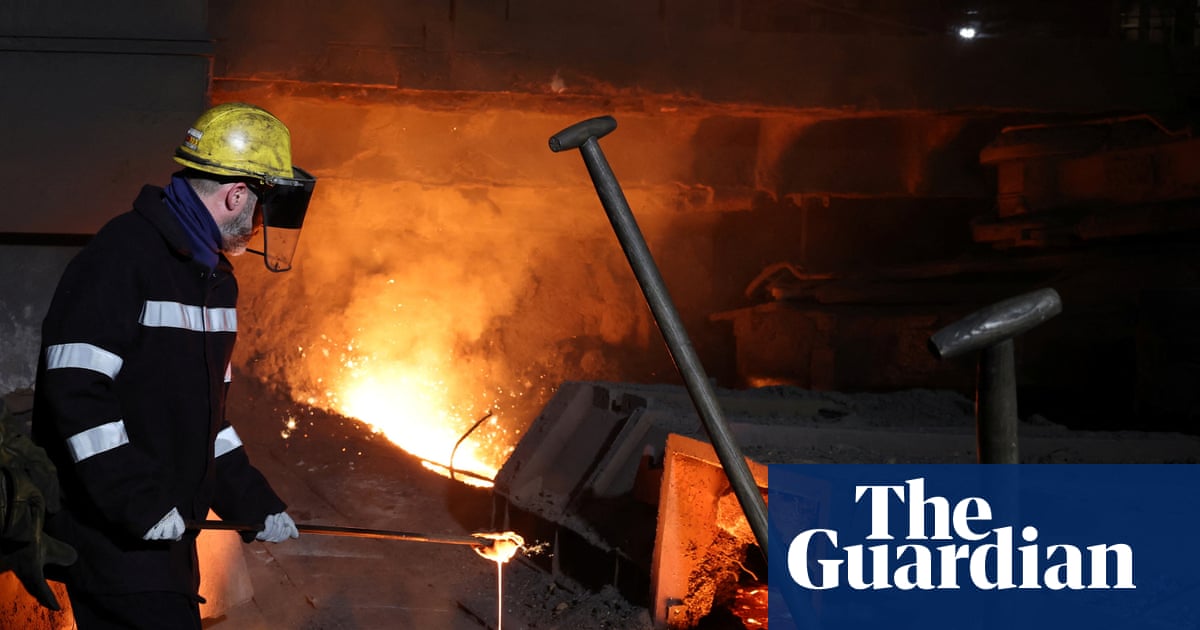
Labour has been urged to lay out a credible plan for the future of British Steel, as the government spending watchdog warned of the “startling” costs of keeping the struggling manufacturer in business with no end in sight. British Steel was taken into public ownership in July to protect “the future of steel production”, 15 months after the government stepped in to prevent the closure of its steelworks in Scunthorpe and the loss of 4,000 jobs. But it is costing £1.3m a day to keep the company running, with the total estimated cost reaching as much as £1.5bn by 2028.
By mid-June, the government had spent £555m paying workers’ salaries and buying raw materials, excluding the cost of external advisers. The public accounts committee of MPs said on Friday that ministers were still “unable to articulate what business model” would put the company on a sustainable footing, nearly a year and a half after taking control at Scunthorpe. It added that the Department for Business and Trade had not given “even indicative estimates” of how much British Steel would ultimately cost taxpayers or how long the situation would continue.
After nationalising British Steel, the government appointed new bosses to focus on stabilising the business. Clive Betts, the committee’s deputy chair, said the move to save the company was “all well and good”, but added: “This was just the beginning. Having brought British Steel onto the taxpayers’ books, it is now up to government to explain its plan for its future.
The reality is that British Steel is unable to wash its own face, and government is now in charge of making sure it gets on to a sustainable financial footing for the future. Jonathan Reynolds, the business secretary, said at the time that the government did not “intervene in private companies lightly” but that the move was important to safeguard heavy industry. The public accounts committee said it showed the government could not “spend all its money supporting British Steel, when clearly there will be a need to support other parts of the industry”.
It added: “[Taxpayers] remain exposed to significant and growing costs and uncertainty – it is not clear whether the money will ever be recovered.” The government should publish a plan for the company that included “options and analysis for the intended future production model and the role of British Steel in the UK economy; the preferred decarbonisation pathway; how the company will become financially sustainable; and the expected costs, funding sources and timetable”, the committee’s report said. The former owner Jingye has separately argued that British Steel owed it almost £1bn when it was nationalised and has started a formal process under an international treaty to win compensation from the government. The move has also put pressure on UK-Chinese relations, with China’s government saying it is “strongly dissatisfied” with the situation.
Extract — continue reading at the source.