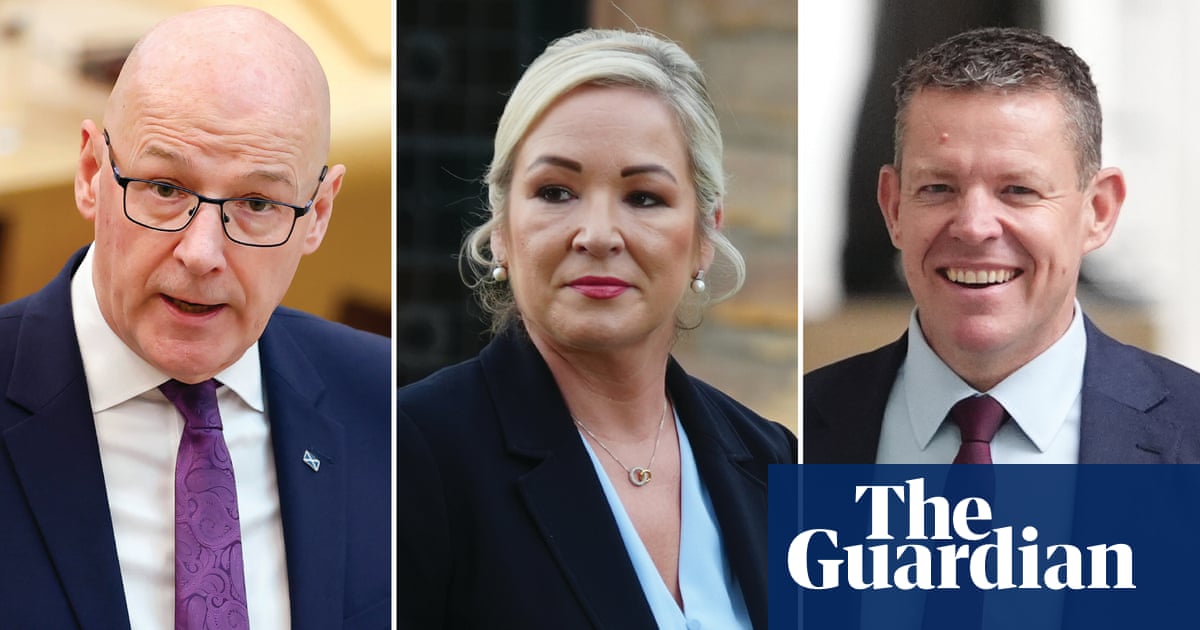
The first ministers of Wales, Scotland and Northern Ireland are to affirm their countries’ right to seek independence from the UK at a summit that is likely to challenge Andy Burnham’s devolution agenda. The Plaid Cymru leader, Rhun ap Iorwerth, the Scottish National party leader, John Swinney , and the Sinn Féin vice-president, Michelle O’Neill, are expected to sign a memorandum of understanding at a landmark conference in Cardiff on Monday that will call on Westminster “to prepare, plan and facilitate constitutional change in Wales, Scotland and Northern Ireland”. The three are meeting in their capacity as party leaders, rather than as officials in their respective governments, alongside the Sinn Féin president and leader of the opposition in Ireland, Mary Lou McDonald.
They will also discuss Europe, international cooperation, the economy and energy issues. Plaid Cymru’s victory in May’s Senedd elections ushered in a new era for the Celtic independence movements, with separatist parties in government in all three countries for the first time. Burnham has made much of his support for regional devolution of power and resources in England since becoming prime minister in July, but his approach to the devolved administrations in Belfast, Cardiff and Edinburgh is less clear.
He wrote to Swinney last week to reiterate that a repeat of 2014’s Scottish independence referendum remains “off limits” after apparently misspeaking during prime minister’s questions. Donald Trump also weighed in on a potential breakup of the UK during a weekend visit to Ireland, telling reporters at a press conference with the taoiseach, Micheál Martin, that he would love to see a united Ireland and that it “may as well happen now”. The unexpected intervention prompted a swift rebuttal from the UK government and the unionist power-sharing members of the Northern Ireland executive.
Asked about the diplomatic backlash he caused, Trump said on Sunday: “I love my comments.” Shortly after reiterating his comments on Irish unity, the US president said he would save his opinion on Scottish independence for another day. Ap Iorwerth told the Guardian this week that he has been encouraged by warm initial discussions with Burnham – a stark contrast to his interactions with Keir Starmer – but that he was wary about the new prime minister being captured by a consensus Westminster view against relinquishing further powers. A Plaid Cymru source called Monday’s summit an opportunity for “a new partnership between our nations”.
That acknowledgment that the people of Scotland can and should determine their own constitutional future is long overdue.” Latest polling suggests 47% of Scottish voters would opt for independence in a referendum held tomorrow, along with 36% in Northern Ireland and 32% in Wales. Support for independence in Scotland has hovered between 45% and 50% since the 2014 referendum, while data suggest it is rising in Wales and Northern Ireland.
Extract — continue reading at the source.