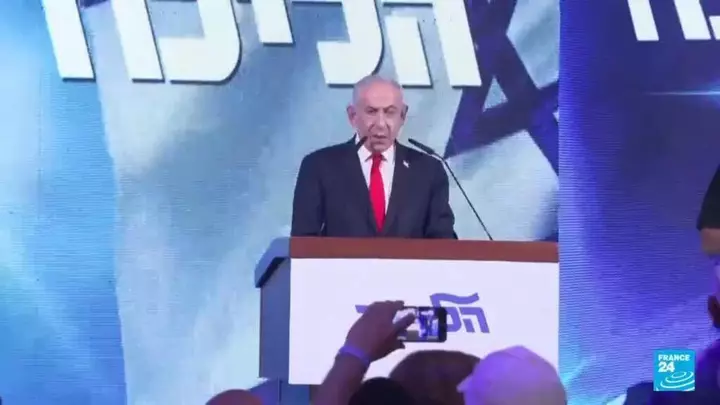
Exit polls from Israel’s election show a neck-and-neck race between Prime Minister Benjamin Netanyahu and his main rival, Gadi Eisenkot, with neither likely to secure a clear path to a governing majority. Tuesday’s vote was largely seen as a referendum on Netanyahu’s leadership and response to the Hamas-led attacks of October 7, 2023, and the subsequent genocidal war on Gaza. It also came as Israel’s pogroms in the occupied West Bank have escalated, and amid mounting tensions with several of its neighbours, many of whom it has attacked in the past three years.
Here are five key takeaways from the Israeli elections so far: Late-night exit polls from Israel’s Channel 12 broadcaster projected the Netanyahu bloc would win 52 seats in the 120-seat Knesset, or Israeli parliament. Netanyahu was edging out the opposition bloc led by former Israeli military chief of staff Gadi Eisenkot’s Yashar party, which was projected to win 49 seats. Israel’s Channel 13 earlier indicated the two blocs were tied, with each winning 51 seats.
Polling indicated that Netanyahu’s Likud party – which leads his wider bloc – could emerge as the single largest party with an estimated 27 seats to 21 for Eisenkot’s Yashar party, according to updated projections from Channels 12 and 13 – giving Likud a clear lead over all others in the parliament. Arab parties were projected to win 19 seats collectively, building on their 2022 performance. Israelis vote for parties, which then form alliances to create a governing coalition with a prime minister at the helm.
No single party has ever won a 61-seat majority. Released by the major Israeli television networks, exit polls are unofficial indicators of the vote. Preliminary official results are expected on Wednesday, and may vary from the exit polls.
Opposition bloc leader Eisenkot, who was mounting a challenge to Netanyahu, said the Israeli public had voted for change and against the incumbent prime minister. Addressing supporters at his Yashar party headquarters, Eisenkot said “this will be a new start. A real new start on a new path.
The old era is over, and Israel is starting a new era.” But the Israeli prime minister told supporters that his Likud party is dominant and called for the formation of a “national right-wing government”. And it is a decisive majority.” He also accused Israeli television channels of trying to discourage his supporters from voting by projecting stronger results for opposition parties. Israeli far-right Finance Minister Bezalel Smotrich told supporters that his party was projected to win seven seats, vowing to continue expansion of Jewish settlements in the occupied West Bank.
Extract — continue reading at the source.