When Gemma Darvill’s dad, Les, was diagnosed with Parkinson’s disease aged 58, joining a walking football team stopped him from confining himself to his own home, and she believes the game saved his life. What she could never have foreseen was that, eight years later, she would find herself coaching the first England women’s Parkinson’s team, helping transform the lives of women with the disease from all across the country. She is set to embark on a journey to Toronto to help spread awareness of the ways in which walking football can help put the brakes on the progression of Parkinson’s symptoms.
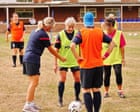
A teacher at Swallowfield primary school in Woburn Sands, in Milton Keynes, Darvill’s interest in walking football was sparked by supporting her dad. She now coaches what is believed to be the first walking football team specifically dedicated to women with Parkinson’s, the Parkinson’s Pioneers, who train in Solihull and have seen a tenfold increase in their membership in just over three years. That led to her appointment as the coach of the first England women’s national side.
There are reportedly about 166,000 people in the UK living with Parkinson’s disease. It is a progressive brain condition for which there is no cure, but known treatments can help reduce the severity of the main symptoms. Darvill, who says exercise “helped slow down the progression of the disease” for her dad, recalled: “When he was first diagnosed, it hits you hard.
But football genuinely saved his life. He used to have a season ticket at Tottenham [but] he gave that up. He didn’t tell any of his friends.
He just stopped doing everything. He really struggled with life in general, [even] getting out of bed. And then we found this football session.
His team’s called Fighting Fit Football [based at Watford’s training ground]. I took him along one week and he’s never looked back since. To Darvill, helping out felt natural: “I’ve always coached football as well as played, and I was a teacher, so I used to run football camps for kids in the school holidays.” Booth and Darvill have seen the Parkinson’s Pioneers blossom into a flourishing community, explaining: “I remember our very first training session, it was only three of us.
Extract — continue reading at the source.