Artificial intelligence is already being used for facial recognition, but how good is it? In lab conditions, it’s extraordinarily precise, correctly identifying people 99 percent of the time. In the real world, however, things get a little tougher.
Bad lighting, sunglasses, clothing, and more can either flummox AI facial recognition systems or lead to false positives. Of course, we already have human forensic facial specialists, and a better understanding of their expertise could help train their computer counterparts. Read more: “Get Ready to Be Identified by Your Ear” To investigate, a team of cognitive and AI researchers from the National Institute of Standards and Technology recruited 27 forensic facial experts employed by the federal government.
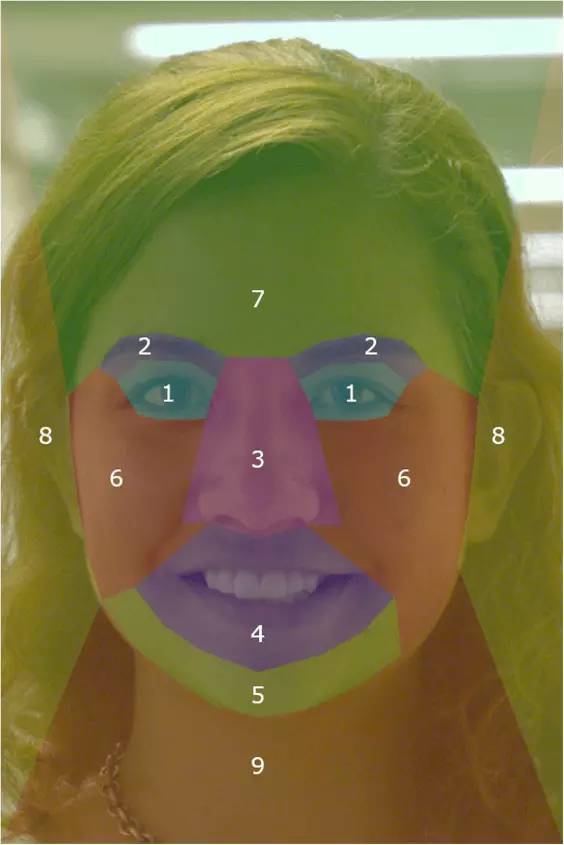
The specialists were given images of two similar faces and one hidden face. The goal was to match the obscured face to one of the other faces by individually removing the coverings from nine different features: cheeks, chin, ears, eyes, eyebrows, forehead, neck, nose, and mouth. A points system incentivized the experts to uncover the fewest possible features and another version of the experiment individually uncovered the features at random.
According to the study published in PLOS One, they were incredibly accurate, correctly identifying the hidden face 90 percent of the time after uncovering only one or two features. Interestingly, along with ears, the seldom-selected foreheads were associated with the highest accuracy (chins and necks were the least helpful). Taken together, the findings are consistent with other research results, which suggest that certain aspects of our faces contain more identifying information than others.
But the adaptability is what stood out to the team. Instead the findings may be useful for training both human and AI facial specialists in the future. So if you’d like to avoid AI identification going forward, remember to pack your earmuffs.
Subscribe to our free newsletter.
Extract — continue reading at the source.