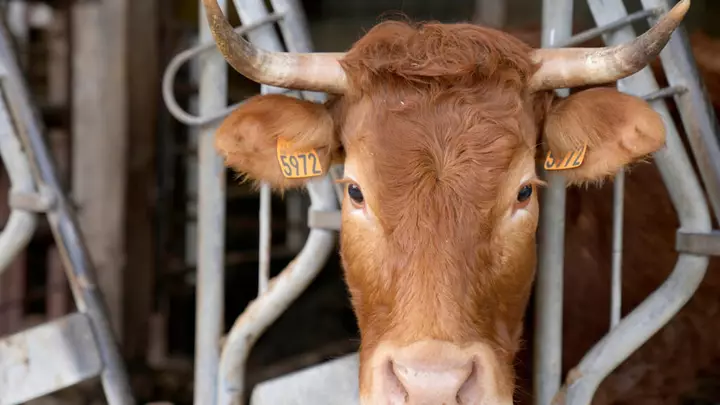
We and our partners do the following data processing based on your consent: store and/or access information on a device, personalised advertising and content, advertising and content measurement, audience research and services development France reports first human case of Shamonda virus, but says there's no public health risk France has reported the first-ever recorded case of a human contracting the Shamonda livestock virus, which is most commonly found in cattle. Public health authorities stressed that there did not appear to be any health risk to the public, adding that the infection had been "an exceptional case" involving a person with a severely compromised immune system. A cow looks out from a barn on a farm in Chemiré-Le-Gaudin, western France, March 18, 2022. © François Mori, AP French health authorities said Thursday that the Shamonda virus, which usually affects livestock, had been detected in a human for the first time in a severely immunocompromised patient who died earlier this month.
There was "no health risk to the general public identified at this time", the health and agriculture ministries said in a joint statement. It added that the human infection appeared to be "an exceptional case involving a severely immunocompromised patient" hospitalised for a serious medical condition. "Despite circulating in Africa and Asia for several decades, the Shamonda virus has never previously been detected in humans," the ministries said.
The virus, which belongs to the Orthobunyavirus group, was first detected in Europe this summer, they said. Read moreFrance confirms first Ebola case in doctor returning from DR Congo mission Transmitted by biting midges and most commonly found in cattle, Shamonda has also been found in horses, alpaca, sheep and goats, the World Organisation for Animal Health (WOAH) said. At this stage in the investigation, the patient was believed to have contracted the virus through the bite of a midge in eastern France, where the virus was circulating in animals during the spring and summer, the ministries said.
"The neurological complications observed in the immunocompromised patient prior to his death are very likely linked to infection with the Shamonda virus," they added, citing preliminary findings. But "clinical, biological and epidemiological investigations are still ongoing", they said. The virus was first detected in Nigeria in the mid-1960s and has since been reported in cattle in several parts of Africa and in Japan.
The virus was detected in Europe for the first time at the end of July, including on cattle farms in France. It has now been detected in 14 western European countries, according to an epidemiological bulletin from France's national research institute monitoring animal health. Cattle are considered its main animal hosts, although sporadic infections in smaller livestock and horses have also been identified in France this summer.
In cattle, the main symptoms are acute diarrhoea, fever, lethargy and a drop in milk production. A study of French nine dairy farms found milk output fell by up to 75 percent in affected herds. There are currently no commercially available vaccines against Shamonda virus, WOAH said.
Extract — continue reading at the source.