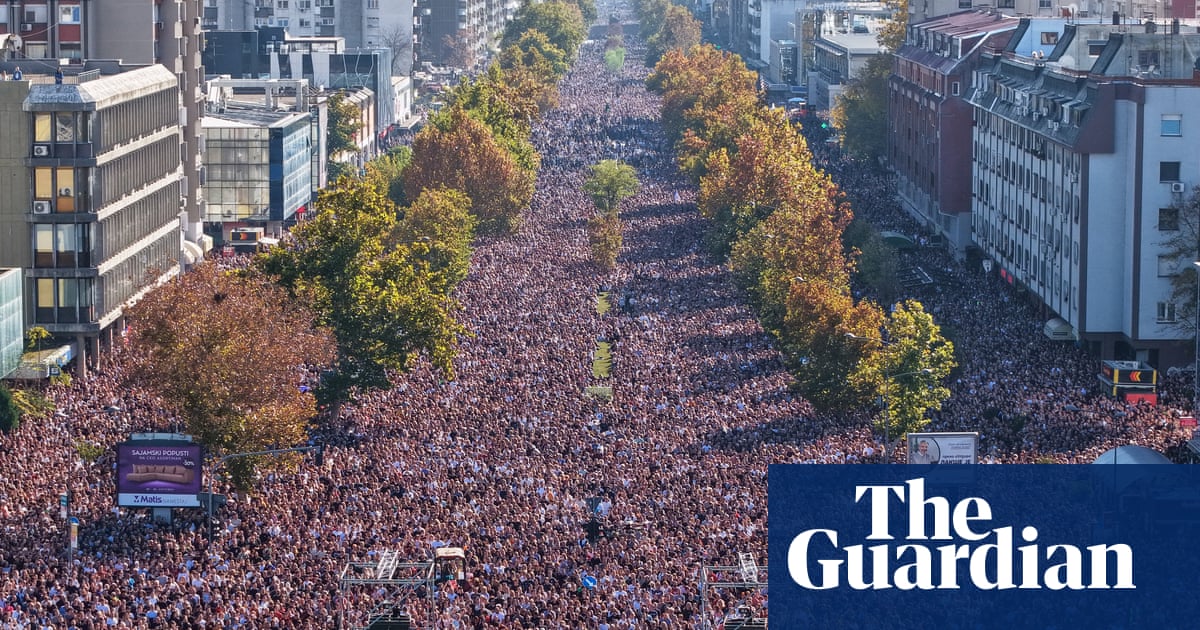
As waves of youth-led protests swell across Europe, prompted by the cost of living, unaffordable housing and education standards, in Serbia the younger generation is taking on the apparatus of the state itself. In tight-run parliamentary elections this Sunday, the country’s most consequential political movement in decades, Student List, is challenging former Slobodan Milošević henchman Aleksandar Vučić and his 12-year domination of Serbian politics. Two years on from a singular national tragedy that galvanised public anger at state cover-ups and corruption, gen Z have channelled their energy and fury into a bold experiment in direct democracy, creating a genuinely leaderless, grassroots movement that is firing up disaffected voters across the country.
I spoke to Julian Borger, our senior international correspondent, who has just returned from Belgrade, about their hopes of emulating the defeat of Vučić’s ally, Viktor Orbán, in neighbouring Hungary and the potential for a democratic domino through central Europe. But first, the headlines. UK news | Every Briton is being urged to stock up to nine litres of bottled water and three days’ worth of food in new government guidance designed to ensure that households can survive a weather, cyber or other serious emergency.
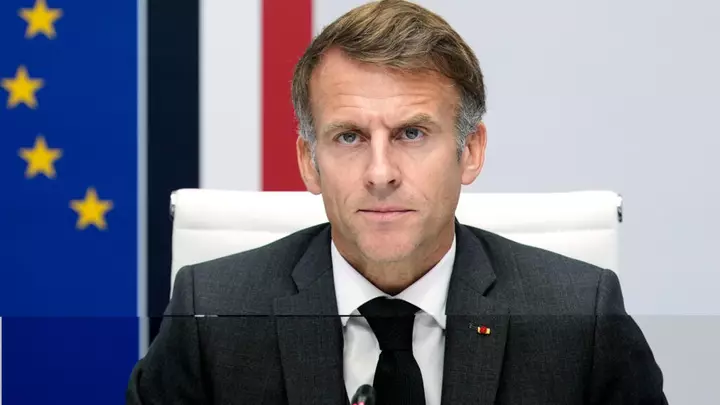
Ukraine | Russia has carried out a massive “demonstrative” attack on Ukraine, bombarding Kyiv with ballistic missiles just hours after Vladimir Putin said he had agreed to resume trilateral negotiations. UK politics | Nigel Farage’s newest billionaire donor was in business with a powerful Iranian religious foundation under the authority of the country’s supreme leader. Europe news | Emmanuel Macron has said “illegitimate” demonstrations will be banned over the coming days as France seeks to get a grip on civil unrest after some of its worst street violence in years.
Energy | Great Britain is expected to pay some of the highest energy costs in Europe this winter as its reliance on imports to ensure a steady supply is forecast to deepen. It was, one Serbian student told me, “the drop that overflowed the glass”. On 1 November 2024, the collapse of a concrete canopy at the railway station in Novi Sad, Serbia’s second largest city, killed 16 people.
The youngest was a six-year-old girl, Sara Firic, who was sitting on a bench with her grandfather and older sister. The Serbian Times reported they were still holding hands when their bodies were dug out of the rubble. In the aftermath of the disaster, student-led protests developed organically, with demonstrators blocking a nearby crossroads for the same number of minutes as lives lost.
As details emerged of botched refurbishment work carried out in what critics described as a corrupt deal with a Chinese consortium, the anger mounted. Ongoing protests were brutally suppressed and Vučić himself branded demonstrators western-backed “terrorists”. Two years later, that single tragedy has sparked a mass movement for accountability and inclusive democracy to counter the creeping authoritarianism of Vučić’s Serbian Progressive party (SNS).
Extract — continue reading at the source.