From mass arrests in France to troop deployments in Italy, European leaders are taking varied approaches to protests and clashes across the continent. The unrest began in France in mid-September with student demonstrations over school conditions, then spread to other countries, where protests have centered on local grievances. President Donald Trump has used the unrest to press his hard-line immigration message, blaming France’s protests on immigration and urging the country to close its borders.
PHOTOS SHOW AFTERMATH OF RIOTS AS MASKED GROUPS CLASH WITH POLICE ACROSS FRANCE French President Emmanuel Macron pushed back, calling foreign leaders' comments "unacceptable and even stupid" and accusing them of exploiting France’s crisis for political gain. Here’s how leaders across Europe are responding. Macron has vowed that those who loot or destroy property will be held accountable and made to pay for the damage.
French authorities deployed 70,000 police officers nationwide Saturday as demonstrations took place in Paris and other cities. Some clashes broke out in several cities, including Paris, Lyon, Lille, Toulouse and Nantes. Police used tear gas, sound grenades and water cannons, and the Interior Ministry reported more than 1,300 arrests.
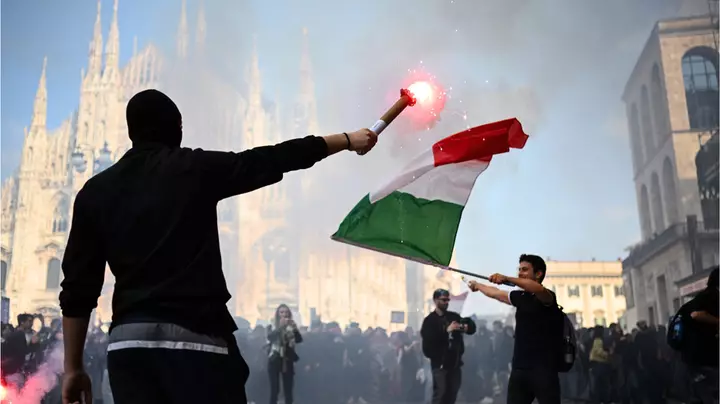
VIOLENCE ERUPTS AT FRANCE PROTESTS AS MACRON WARNS UNREST IS BEING EXPLOITED Most union-organized marches were peaceful, though clashes broke out later in Paris and several other cities. Separately, a French intelligence assessment reportedly identified Antifa and other far-left groups as instigators of some of the violence, according to a French outlet. Prime Minister Giorgia Meloni condemned what she called "gangs of thugs" who used demonstrations to "sow chaos," and voiced support for police facing violence in several Italian cities.
Meloni moved quickly after the previous weekend’s looting and clashes, sending 500 additional soldiers to Milan and approving tougher penalties for minors involved in vandalism. She said destroying and stealing was a crime and that the state's response would be firm. The measures put Meloni among the European leaders taking the most visible steps to deter further violence.
While Greece has seen less unrest than France and other European countries, officials have been monitoring the risk of clashes as student and teacher demonstrations spread. Government spokesperson Pavlos Marinakis said the right to protest must be respected as long as demonstrations remain lawful, while condemning violence, looting and occupations. Police still kept a visible presence at demonstrations earlier in the week, which largely passed without major violence.
Extract — continue reading at the source.