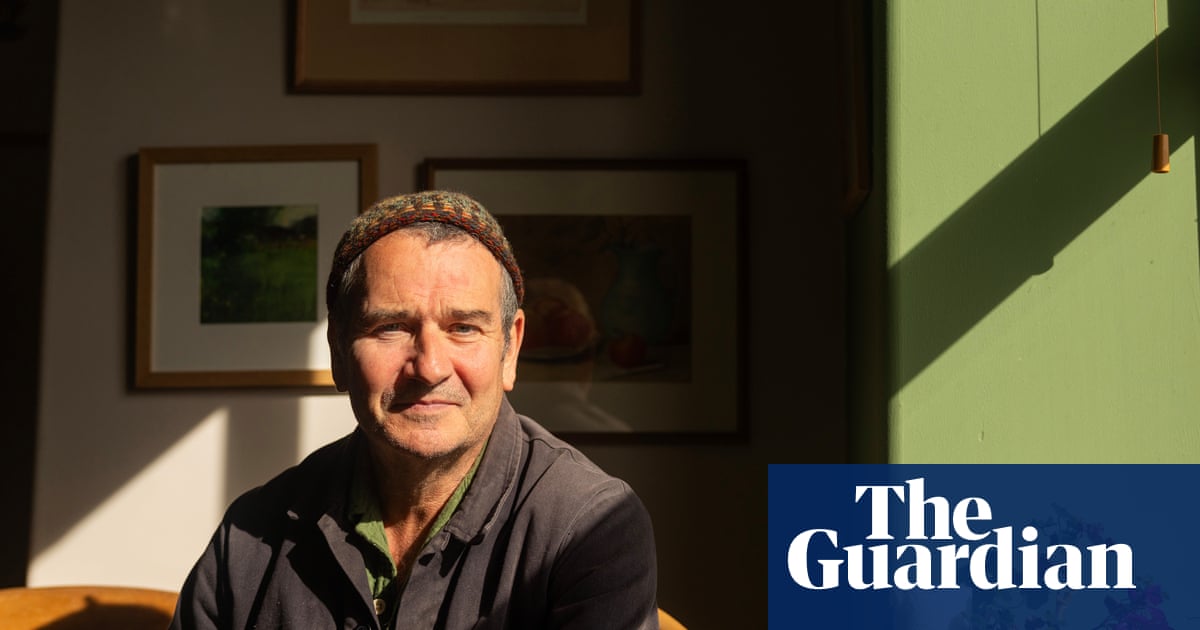
In the autumn of 1987, Mark Cocker sat in a field near Norwich and watched a jay burying acorns for the long winter ahead. He described the scene in his first country diary for the Guardian. Thirty-nine years on, some of those jay-planted acorns will be mature oaks now, and Cocker is completing his 1,000th diary for the world’s oldest column in an English-language newspaper.
In his next diary, he will reflect on the changing birdlife around Flint Clough, in the Peak District, where he first marvelled at rare birds aged 12 after devouring bird books in his bedroom. As a boy, he would find cuckoo, golden plover, ring ouzel and twite, a once-common bird which is now virtually extinct in England. On his latest visit a few weeks ago, he saw raptors he would have only dreamed of as a boy, “a whole slew of buzzards, two peregrines, two marsh harriers – the first I’ve ever seen in Derbyshire – and several red kites”.
The Guardian country diary began in 1904 with the nature-loving dispatches of Thomas Coward, a retired textile bleacher from Cheshire. Today there is a diverse roster of about 30 diarists spread from Cornwall to the Cairngorms who include farmers, scientists, conservationists, a vicar, a thatcher and a forager, as well as writer-naturalists such as Cocker, who pens a fortnightly dispatch, usually from his local patch in Derbyshire. Despite honing his skills by working as a warden at Holkham national nature reserve in north Norfolk, while also becoming the first member of his family to attend university, where he studied English, Cocker says it took him 10 years to master the deceptively difficult craft of the diary – a compelling story about rural life in just 360 words.
You’ve got to awaken the subject from its dormancy and get straight into the theme. And then the best diaries link it to something else. You have to often imply or adumbrate rather than specify.
And it’s that connection between the part and the whole, the moment and the universal, which is the trick of the diary.” For Cocker, who earlier this month published The Nature of Seeing, a collection of recent diaries alongside new essays exploring how we might experience nature more fully, the close observation required for appreciating nature is a discipline that benefits all writing. He points to the surprising number of literary greats who have also kindled a passion for wildlife, from Margaret Atwood to Vladimir Nabokov. Before he began writing, Cocker worked as a refuse collector, a road sweeper, a potato picker and, as a penniless student, posed nude for the local art college.
His big break came after a conservationist friend wrote to the Guardian to complain about the surfeit of inconsequential diaries about cricket matches. Cocker did that, writing early columns on chiffchaffs, silver-studded blue butterflies and sparrowhawks, before becoming a regular when the legendary Lakeland diarist Enid Wilson fell ill. Between them, Wilson and Cocker have covered a span of 76 years.
Extract — continue reading at the source.