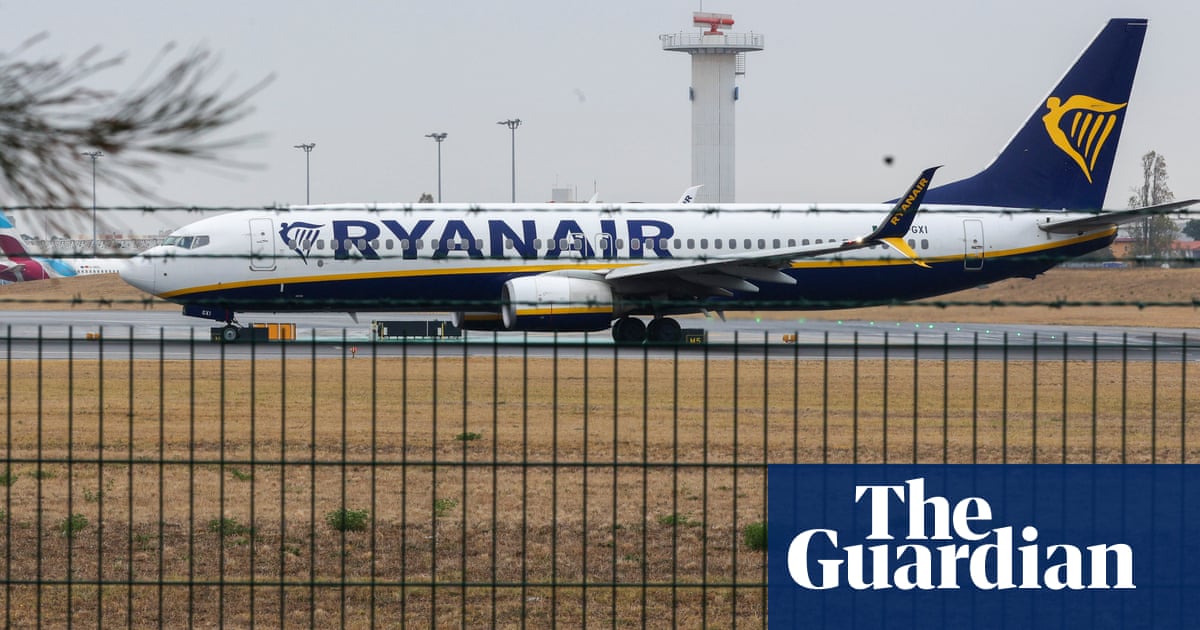
A fresh wave of bomb threats has disrupted air traffic across Europe but the affected planes landed safely and searches revealed no explosive devices. The latest alerts affected at least 18 flights to or from Bulgaria, Czechia, France, Italy, Hungary, Cyprus, Romania, the UK and Portugal. Danish police investigated a threat against Copenhagen airport but the airport said it was operating normally.
The warnings followed separate threats on Tuesday and Thursday that forced at least 35 flights to be diverted or searched, raising questions over an apparently coordinated effort to cause chaos for travellers. The latest threats affected at least nine flights to and from Prague, four flights over France, two flights en route to Sofia and a flight from Lisbon to Rome. Hungary scrambled fighter jets three times to escort civilian flights in its airspace, the defence minister, Romulusz Ruszin-Szendi, said on Facebook.
The affected flights had knock-on effects but were a tiny percentage – just 0.0674% – of the 26,709 flights that according to the air traffic control agency Eurocontrol were scheduled in Europe on Friday. A separate spate of threats on Friday against media organisations in Ireland disrupted broadcasts and prompted staff evacuations and police searches of offices and newsrooms. The taoiseach, Micheál Martin, told RTÉ Radio 1 after it resumed scheduled broadcasting that such threats had to be taken seriously and were an effort to sow fear and anxiety.
The British broadcaster Sky said on Friday it had also received a security threat and reported the matter to the relevant authorities. Earlier this week, cyber-attacks targeted supermarket refrigeration systems in at least seven European countries. Investigators have said there was no evidence that hoaxes against airlines and other targets were being orchestrated by a hostile terror group or state actor, such as Russia or Iran, but that inquiries continue.
Some of the threats on Thursday were signed “fighters of the Male State”, a reference to a Russian far-right, ultranationalist and misogynistic movement founded in 2016. Some officials suspect the waves of disruption are linked to European support for Ukraine in its war against the Russian invasion. Spain’s foreign minister, José Manuel Albares, said authorities needed more time to identify culprits but that there appeared to be a pattern.
Extract — continue reading at the source.