Earlier this month, gaming giant Electronic Arts was sold to an investment consortium including Saudi Arabia's Public Investment Fund and US President Donald Trump's son-in-law, Jared Kushner, for $55 billion (€47 billion). The deal stood out in a few ways. It is believed to be one of the largest leveraged buyouts in history, meaning a significant chunk of the $55 billion was borrowed money that the company itself will have to pay back.
It was also the second-biggest deal in gaming history, after Microsoft's purchase of Activision Blizzard, the company behind the "Call of Duty" franchise, for $69 billion in 2023. The Electronic Arts sale additionally shone a light on the growing economic significance of the gaming industry and the increasing interest from major global investors such as Saudi Arabia, seeking to benefit from the sector's cultural and financial clout. That cultural and financial clout will be on full display over the next few days in the German city of Cologne, where Gamescom, the world's largest gaming event and trade fair, takes place.
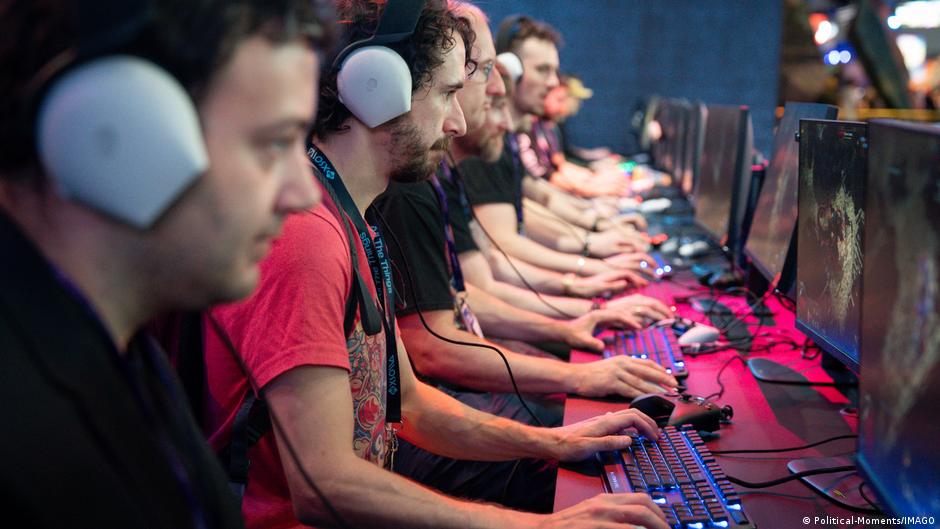
The event attracts thousands of exhibitors and games developers, close to half a million visitors and many more millions of fans connecting online from around the world. It's the place where companies build hype for their upcoming releases, with massive rooms packed with screens, consoles and a range of gaming experiences. To view this video please enable JavaScript, and consider upgrading to a web browser that supports HTML5 video "Gamescom is a very useful barometer for the health and mindset of the industry," Piers Harding-Rolls, a games industry analyst with Ampere, told DW.
That health looks fairly robust at present. The global games market is currently valued at $213.9 billion, up 6.1% year on year, according to Newzoo, a gaming industry market analysis company. Manu Rosier, the company's director of market intelligence, says that growth is broad across the sector's three main platforms: mobile, console and PC.
It now comfortably rivals the movie and music businesses both in terms of finances and, some would argue, cultural significance and reach. "If you add the music subscription and transactional markets together with the cinema box office, spending on games is over three times bigger," said Harding-Rolls. Joost van Dreunen, an assistant professor at NYU Stern School of Business and the author of "One Up: Creativity, Competition, and the Global Business of Video Games," says gaming's communal aspects have powered its growth.
"The cultural relevance of interactive entertainment has substantially expanded in the past few years, as millions of players around the world have found a common interest in playing together online," he told DW. "That's something few other forms of entertainment have accomplished." Yet the sector faces significant challenges. Like most industries, it is grappling with artificial intelligence (AI) and an onslaught of AI-generated material.
Extract — continue reading at the source.