Portadown, Northern Ireland – On the Garvaghy Road in Northern Ireland, residents have spent days gathering to stand guard in their community. They have linked arms and blocked their road, preparing to stop a Protestant Orange Order parade from attempting to march through this predominantly Catholic area for the first time in 28 years. Others brought food and stayed through the night, keeping watch.
The High Court order has overturned that ban. Now, a small group of Orangemen gathers at Drumcree Church each day in their traditional regalia, ready to march. But they have not been able to get beyond the end of the road.
Police stand in their way, refusing them permission to pass and citing the risk of violence with so many protesters waiting a few hundred metres away. This has infuriated the Orange Order, which has called for the Police Service of Northern Ireland chief constable, Jon Boutcher, to be removed. The group believe they have a legal right to march and accuse police of yielding to the protesters.
When asked how much longer the Orangemen are prepared to wait, Dawson said, “I’ve been at Drumcree for 28 years.” Dawson warned of a dangerous precedent in which “might makes right”. If a protest is big enough, the police can refuse to uphold a court ruling, he said, adding, “We have the law on our side here.” Ultan Larkin, a protester who travelled to Portadown from the neighbouring town of Armagh to show support for the Garvaghy Road residents, said, “The law is on their side, but justice is not on their side. Just because you can doesn’t mean you should.” The standoff has so far been peaceful.
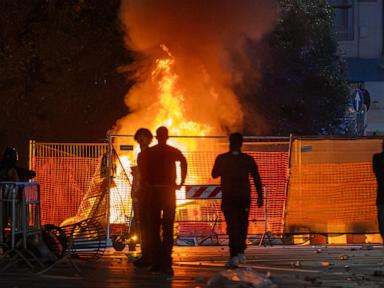
But history tells the story of why this confrontation has a real risk of escalation. Garvaghy Road was one of the most potent flashpoints of The Troubles – a 30-year conflict between mostly Protestant unionists who fought for Northern Ireland to remain part of the UK, and predominantly Catholic republicans who want a united Ireland. Orange marches through the Catholic area were usually accompanied by some of the worst sectarian violence Northern Ireland has seen.
The peace deal known as the Good Friday Agreement was signed in 1998, and it transformed Northern Ireland. Large-scale violence largely ended, former enemies shared power in a devolved assembly at Stormont, and a generation grew up in an era of peace without soldiers manning checkpoints on their streets. Following this peace process, the Orange Order was prevented from parading along Garvaghy Road – an effective ban that has lasted almost three decades, until now.
Extract — continue reading at the source.