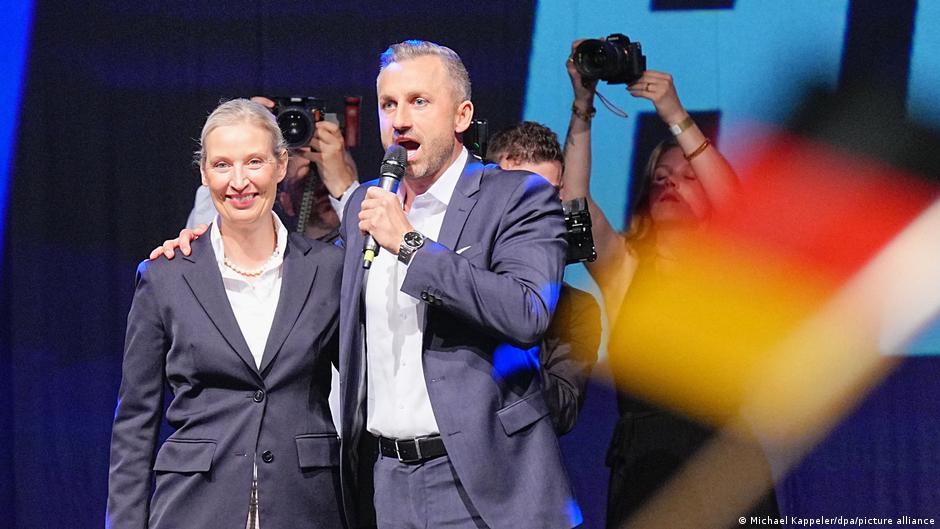
The results came in as predicted: The AfD, which is considered far-right extremist in parts, won the election in Saxony-Anhalt and could now put forward the state’s minister-president and take over the state government. What hardly anyone expected, however, was this: The governing CDU is now barely half as strong as it was, while the other parties have been left far behind. Calling it a landslide victory for the AfD is no exaggeration.
And many commentators go so far as to call it a turning point in Germany’s postwar history. "A state government led by the AfD would certainly be seen by many as a turning point and would further fuel the debate over how best to deal with the party," Commerzbank economist Ralph Solveen told . At the same time, he advises waiting to see what happens, saying that things are rarely as bad as they seem.
"Many of these decisions are unlikely to affect the economy until the medium to long term," he said. "Decisions on most taxes, the structure of the labor market and social security systems are made at the federal level. That is why the AfD, in many of its pledges, only promises to advocate for something in the Bundesrat, which is unlikely to succeed given the foreseeable isolation of an AfD-led government." To view this video please enable JavaScript, and consider upgrading to a web browser that supports HTML5 video Many business community concerns had already been raised before the election.
It also became clear that there are differing views within the AfD, which could lead to unpredictable policies. For example, DW reported two months ago that Hannes Loth, a member of the AfD and the mayor in Raguhn-Jessnitz, Saxony-Anhalt, sought to have six new wind turbines installed. This pledge puts him at odds with the official stance of his own party.
Whether this is a sign of internal party pluralism or simply local political pragmatism will become clear during the coming legislative term, especially if the AfD ends up in the state government. It is not, however, serving to reassure business leaders. One issue the AfD campaigned on was a promise to limit the number of foreigners.
But will the party actually be able to implement its goal? On this point, Michael Berlemann, director of the Hamburg Institute of International Economics (HWWI), remains skeptical. "A large part of the measures it has promised cannot be implemented at the state level because the federal government is responsible for them," he said.
Extract — continue reading at the source.