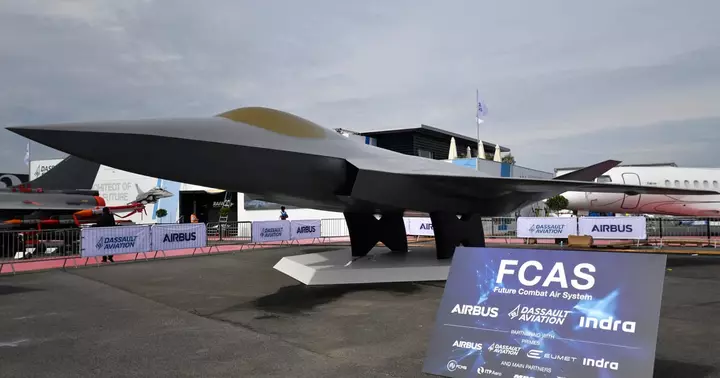
BERLIN — Germany faces a consequential choice over building its next fighter jet: join an existing project with the U.K., Italy and Japan, or develop a new aircraft with Sweden and Spain. The decision will shape its military capabilities and diplomatic alliances for decades. The dilemma follows the collapse of the Future Combat Air System, Germany's troubled fighter project with France and Spain, leaving Berlin to reconsider how it develops advanced military technology with European partners.
Defense ministry assessments favor partnering with Stockholm and Madrid, citing military requirements and opportunities for German industry, while chancellery officials, according to industry and diplomatic officials who spoke with POLITICO on the basis of anonymity to discuss sensitive issues, see diplomatic advantages in aligning with London. And while that ambition predates Washington's increasingly unpredictable approach to European security, President Donald Trump’s threats to leave NATO and criticism of allies have raised the stakes. At a campaign rally last week, the U.S. president warned that America would have “no choice but to leave” Europe — implying American troops on bases — if its leaders failed to change course on immigration.
He also criticized NATO allies for refusing to support Washington’s war against Iran. Ukraine’s recent difficulties with American-controlled SpaceX satellite communications, delays in deliveries of American-made air defense missiles and problems with intelligence sharing have also highlighted how countries relying on U.S. technology can remain vulnerable to decisions made in Washington. The fighter jet decision is the most immediate test of a broader effort: Germany is also planning its own military satellite communications network that could cost €10 billion, and is working with Britain to develop European long-range missiles capable of striking targets more than 2,000 kilometers away.
It also aims to meet NATO’s core defense spending target of 3.5 percent of GDP by 2029 — six years ahead of the alliance’s deadline. But spending more will not automatically make it militarily independent. Germany cannot develop every advanced weapon by itself, so it needs partners that can deliver military capabilities while giving Germany a lasting role in developing and controlling them.
In June, Merz and French President Emmanuel Macron abandoned their plans to jointly develop Europe’s next-generation fighter jet. The FCAS project was supposed to be a flagship of European defense cooperation and replace Germany’s aging Eurofighters. Instead, it was derailed by years of industrial disagreements between Germany's Airbus Defence and France's Dassault.
The collapse showed how partner disputes can tie up billions in taxpayer money in delays and abandoned ambitions. Now Germany’s immediate challenge is finding a replacement. One possibility comes from Britain, which is already developing a next-generation aircraft with Italy and Japan under the Global Combat Air Programme, or GCAP.
Extract — continue reading at the source.