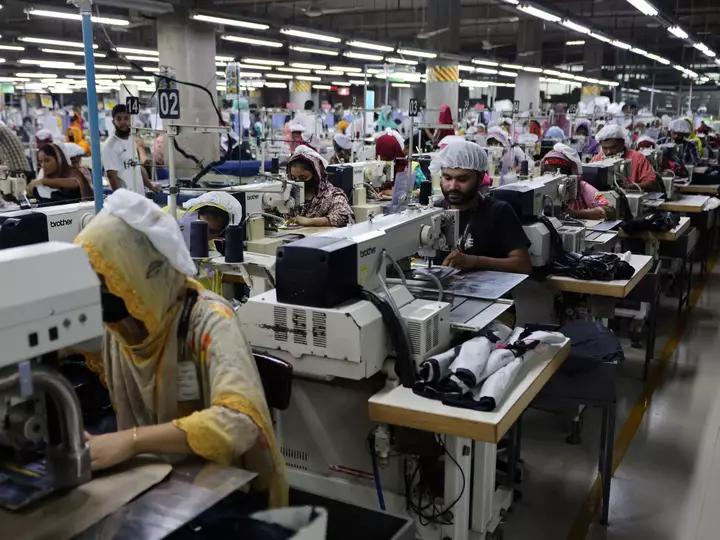
Dhaka, Bangladesh – Laili Begum can no longer afford to keep her two children in school. There are days when the 37-year-old garment worker struggles to put even one proper meal on the table. An experienced sewing operator at Virtual Bottoms Limited, a ready-made garments factory near Bangladesh’s capital Dhaka, Begum earns around 15,000 taka ($121) a month, which sometimes rises to 18,000–20,000 taka ($145–$161) when she works overtime.
Her 15-year-old daughter and 12-year-old son dropped out of school earlier this year because she could not afford their education. This morning, we had only puffed rice and Bombay mix [a snack]. There was nothing for lunch.
We’ve been going hungry, hoping to have a proper meal tonight. This is how we survive now,” she told Al Jazeera. What else can I do?” Begum is among approximately four million garment factory workers in Bangladesh, half of them women.
They are now protesting for better wages. Bangladesh, the world’s second-largest apparel exporter after China, is a key supplier to global fashion brands such as H&M, Zara, Levi Strauss, Walmart, and Primark. The country’s ready-made garment sector accounts for more than 80 percent of its export earnings, which touched $39bn last financial year.
Yet, the people sewing those clothes say their pay no longer covers basic living costs. A Muslim-majority South Asian nation of 170 million people, Bangladesh has one of the world’s lowest wages among apparel-producing countries. Cambodia has a minimum wage of $210 a month for garment workers, Vietnam’s range from $140-$210, while wages at China’s manufacturing hub of Guangdong range between $286 and $378.
That disparity – worsened by rising inflation and the growing cost of living – pushed the workers to strike and hit the streets on Saturday to demand a minimum wage of 30,000 taka ($241), more than double the current wage of 12,500 taka ($102). On Sunday, Begum joined one such protest in the Jamgora part of the Ashulia industrial area on the outskirts of the capital Dhaka, with the police firing tear gas and stun grenades to disperse the protesters, and arresting dozens of them. The Bangladesh Garment Manufacturers and Exporters Association said the demonstrations disrupted operations at 529 factories on Sunday and affected nearly a million workers.
Extract — continue reading at the source.