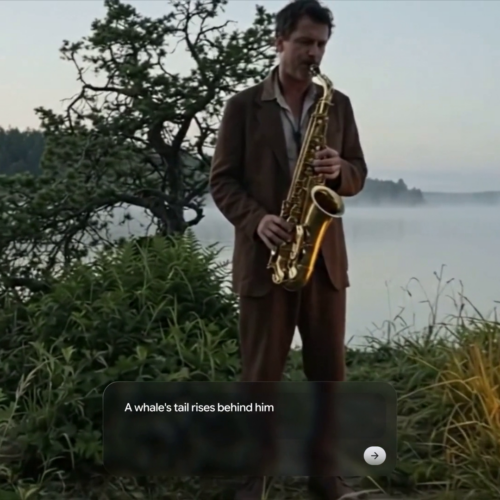
Google DeepMind released its newest world model, Genie 4, in research preview on Tuesday. The latest model generates the most photorealistic and interactive worlds yet, allowing users to type prompts mid-simulation to change the scene. The model also generates real-time audio that matches the simulated world, including music, ambient noises, and interactive dialogue.
The release of Genie 4 comes a couple of months after AI video startup Runway released its second world model, GWM Worlds 2, a playable model that responds dynamically to user inputs and includes audio generation. At the same time, the world model industry is beginning to consolidate. Fei-Fei Li’s World Labs is being acquired by AMD, Amazon is in talks to buy Decart, and Rivian just acquired Third Dimension to bring simulation capabilities in-house for self-driving testing.
Genie 4 is Google’s latest move to stay ahead in the crowded field. Google released its predecessor, Genie 3, as a research preview a little over a year ago. Aside from being far more photorealistic and featuring audio, Genie 4 allows for freeform edits, like changing the weather or camera angle in real time or adding new people or objects.
It can maintain a consistent scene for up to two minutes, double its predecessor’s limit, and offers better physics and more human-like characters. Gemini, Google’s AI model, is also more closely integrated with Genie 4, acting as the director that plans steps and checks frames while Genie creates the visuals. In a research experiment tied to Gemini Robotics, a Gemini 4 Argon model broke down tasks into steps that Genie 4 simulated in real time.
The experiment shows a possible way to test robot scenarios in simulation before they happen in the real world. As with other world models, the pitched commercial use cases include gaming, interactive learning, and robotics. One speculative example of interactive learning would be entering a painting of a historical scene and chatting to the painting’s subjects about the event portrayed.
But “trusted testers” — the people who get first access to Google cutting-edge products — are pointing to a possible new use: prototyping films. Rivas added that users could, eventually, rely on Gemini Omni, a multimodal large language model that can generate video from images, audio, and text, to turn those prototypes into creative assets. Though those capabilities, he says, are still a ways off.
Extract — continue reading at the source.