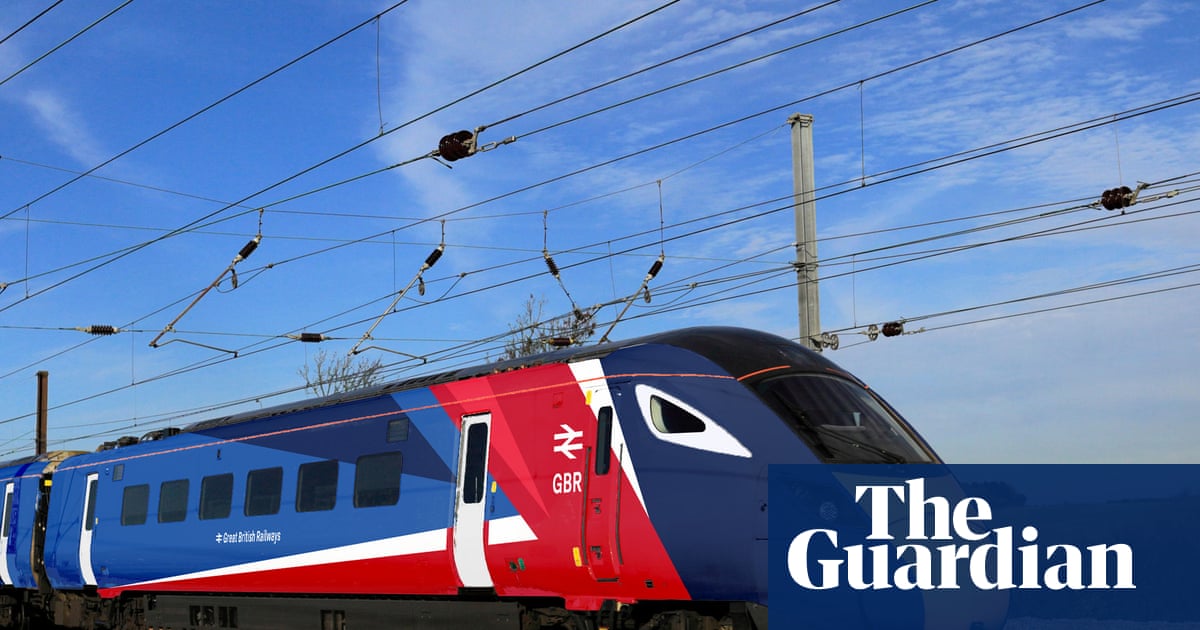
The glad tidings brought by the minister were that the wait was almost over: the establishment of Great British Railways could be wrapped up by Christmas, at least in law. But with a renationalised industry facing fresh storms in 2027, some in the railway world are wondering if they should be careful what they wish for. The legislation that will rip up how rail has been run, anticipated for the best part of a decade, is being chewed over in its final stages in the House of Lords.
It now has, the rail minister, Peter Hendy, told an industry conference in London this week, “a fair chance of getting royal assent” before parliament’s winter break, allowing a new arm’s-length body with overall control of Britain’s railway, spanning the track and train services. Great Western Railway will come into the government stable in December, with the remaining private train operations, East Midland Railway, Avanti and CrossCountry, due to be nationalised next year. There will be plenty to fix, as politicians and rail bosses acknowledged.
Lord Hendy opened the Railway Industry Association’s conference by describing every train in the north of England as “clapped out”; Jeremy Westlake, the chief executive of infrastructure manager Network Rail, concluded the event by bringing up the two derailments in 24 hours at the peak of a summer of delays. Some of the solutions may appear easier within an integrated, nationalised industry. The site of the future Great British Railways (GBR) HQ in Derby has now been picked, even if it remains unclear how many of rail’s leaders fancy decamping there, and exactly where the power will lie.
It won’t be, said Hendy, an all-powerful “Kremlin in Derby”, with control instead largely given to regional managing directors, something so far instigated at South Western and Southeastern. For Hendy, the rewards of the new structure will be a single point of accountability, and the end of a “culture of blame” under privatisation where contracts pitted operators against Network Rail, especially in times of disruption or delay. Personifying for now the GBR ideal of track and train in harmony are Westlake and Alex Hynes, the chief executive of DFTO, the state operator managing the renationalised train services, who discussed their bromance in another joint appearance on stage at the London conference.
Hynes said he had told train staff to “go find your new best friend on the trackside … We try to role-model it.” It remains to be seen if either will be for the chop next year, when the newly appointed chair of GBR, John Kingman, picks one overall integrated boss. The flip side of the road to reform and integration for some, especially non-frontline managerial staff, has been prolonged uncertainty, as roles merge or disappear. But GBR should mean being able to move resources more easily around the railway, be it people or trains.
Hendy cited Great Western’s problems with former Transport for Wales trains, which had deteriorated after being replaced in service: “There’s nothing more stupid than watching some trains halfway through their lives that have been parked in a field … miserably failing on a daily basis because the industry wasn’t coherent enough. You can’t believe how stupid that is.” Likewise, he said, most train companies “have been desperately short of drivers … That’s crackers. We can fix that – and I think it’s really important to fix those basic things.
Extract — continue reading at the source.