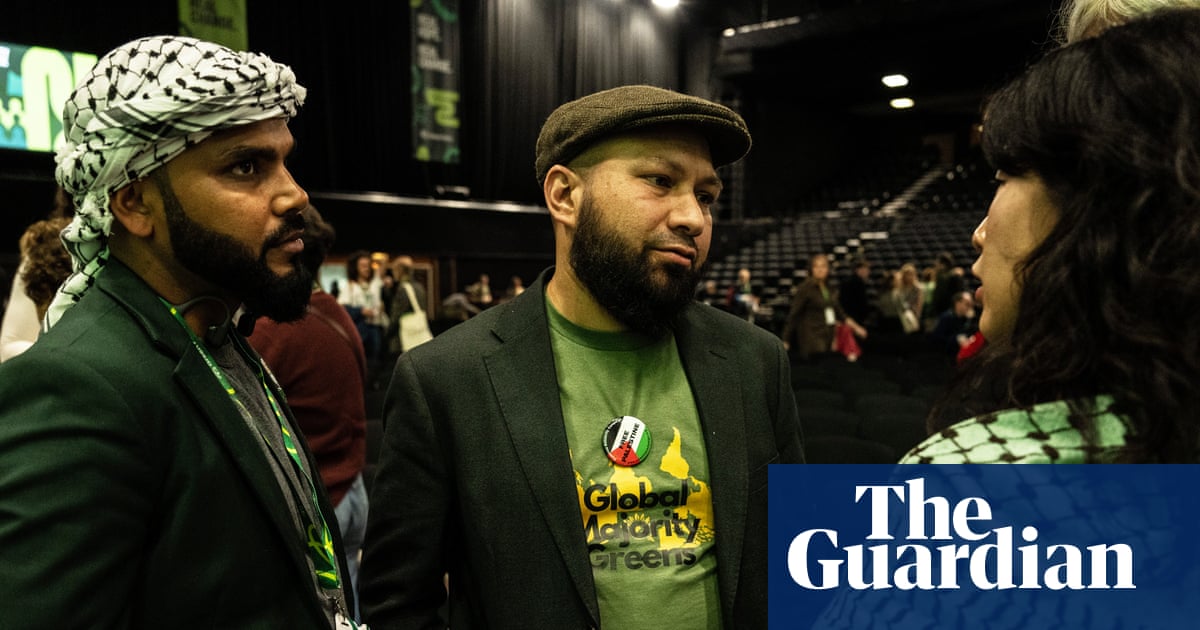
The English and Welsh Greens are facing international ostracism after adopting a policy declaring Zionism as a form of racism, which has drawn dismay from the group representing European Greens. The co-leader of the German Greens separately said the policy was “intolerable and unacceptable”, running contrary to its belief in the right of Israel to exist. The binding policy motion passed in a vote at the Greens’ conference in Brighton on Sunday.
Four of the party’s five MPs opposed it. The policy says Zionism, the movement for a Jewish state, should be “treated as any other form of racism”, and backs a single democratic Palestinian state across historic Palestine “with equal rights for all”. The European Green party, which represents 47 parties, including the Green party of England and Wales (GPEW), said it supported a two-state solution for Israel and Palestine, and the new motion went against this.
The alliance “will immediately demand clarity from the leadership and parliamentary group of GPEW, to understand the official party policy of GPEW, how they position themselves towards the self-determination of Israelis and Jews as well as the protection of Jewish people and members in the party”, it said in a statement. Felix Banaszak, the leader of the German Greens, known formally as Alliance 90/the Greens, told a press conference the motion was “intolerable and unacceptable”. Banaszak said: “There is a widely held view within the European Green party that Israel has a right to exist and that this right must not be undermined.” His party would “approach our partner parties in Europe to clarify how to deal with this”.
Sandy Ruthven, the chair of Amnesty International UK’s charitable trust and a longstanding Green member, resigned over the motion and accused the party of failing to confront antisemitism. The fallout from Sunday’s vote has also intensified a debate over whether the Greens’ highly decentralised policymaking structures remain suitable for a party whose membership has expanded rapidly. Policy is made at the party’s two annual conferences, which generally involve a small proportion of members.
The Zionism motion won just over 1,000 votes, approximately 0.4% of the total membership. Ellie Chowns, a former co-leader, said the party’s governance and policymaking “urgently need to be modernised”. They said: “The German Greens support arming Israel, opposed a ceasefire to Israel’s onslaught on Gaza, backed the suspension of funding to Unrwa and co-sponsored a Bundestag resolution describing the arguments and methods of the peaceful, Palestinian-led BDS campaign as antisemitic.” Any change to internal party structures would be hard to implement.
One Green insider said that to give MPs greater authority over members would undermine the party’s commitment to grassroots democracy. However, they said the existing model could produce a lack of coherence and strategic direction, while giving a disproportionate influence to members with the most time to participate in policymaking. They suggested members could determine broad strategic priorities, with smaller bodies developing detailed policy while remaining accountable to the membership.
Extract — continue reading at the source.