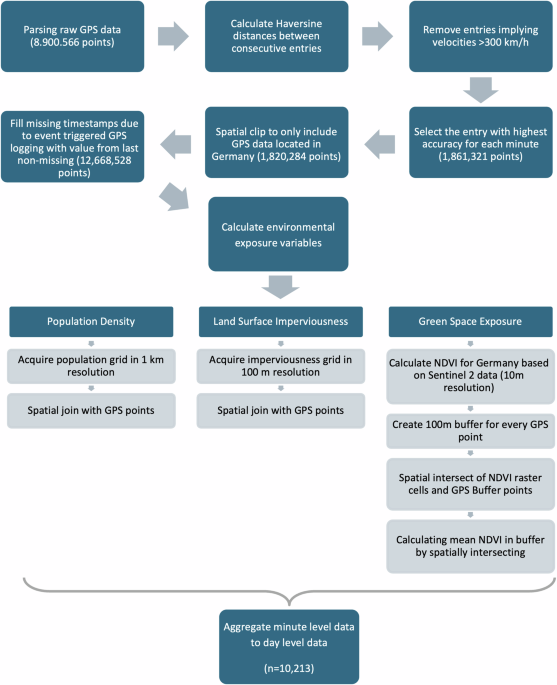
Urban living is linked to increased psychiatric morbidity, while green spaces may protect mental health via stress-buffering effects. Yet, the role of green space exposure in the onset of affective episodes in bipolar disorder (BD) remains unclear. Using 12 months of GPS data from 29 participants with BD-I/II, we quantified daily exposure to green spaces (green area & NDVI; covariates: population density & imperviousness).
Affective status (euthymia, depressive or (hypo)manic episode) was assessed via SCID-based biweekly clinician interviews (26 assessments per participant). Multilevel logistic regression examined moving averages and temporal variance of green space exposure during prodromal and episode weeks relative to euthymia. Reduced mean green space exposure and increased exposure variability were consistently associated with prodromal phases of (hypo)manic episodes, with variance effects persisting into acute (hypo)mania.
In contrast, depressive episodes showed limited prodromal predictability. These findings suggest dynamic environmental signatures consistent with early-warning dynamics as modifiable contextual correlates in BD. Meta-analytic evidence reveals that urban living is associated with increased rates of psychiatric disorders1,2,3, especially for mood disorders3.
Concurrently, green spaces have increasingly been recognized as protective factors mitigating psychiatric morbidity4,5, and gained considerable attention in popular science discourse (‘forest bathing'6,7,8). A recent meta-analysis9 addressed this by identifying urban green spaces as crucial factors in reducing negative emotional states such as depression and anxiety, while simultaneously promoting overall mental well-being. Several theoretical frameworks have been proposed to explain how exposure to green spaces may exert a calming and restorative effect on individuals.
The biophilia hypothesis suggests that humans possess an innate affinity for nature, underscoring our species’ deep-rooted connection to natural environments10. The stress reduction theory posits that natural settings reduce physiological stress responses, leading to lower heart rates and decreased muscle tension11. Additionally, the attention restoration theory proposes that the sensory qualities of nature, such as its visual and auditory stimuli, help restore attentional capacity and mitigate cognitive fatigue12.
As the reported theories assume momentary associations, green space exposure may also influence the fluctuation of psychopathological symptoms significantly. Adopting such a perspective would broaden the scope of the green space exposure effect beyond the mere cross-sectional, odds ratio-based distinction between cases and controls. A particularly interesting disorder in this regard is bipolar disorder (BD).
Extract — continue reading at the source.


