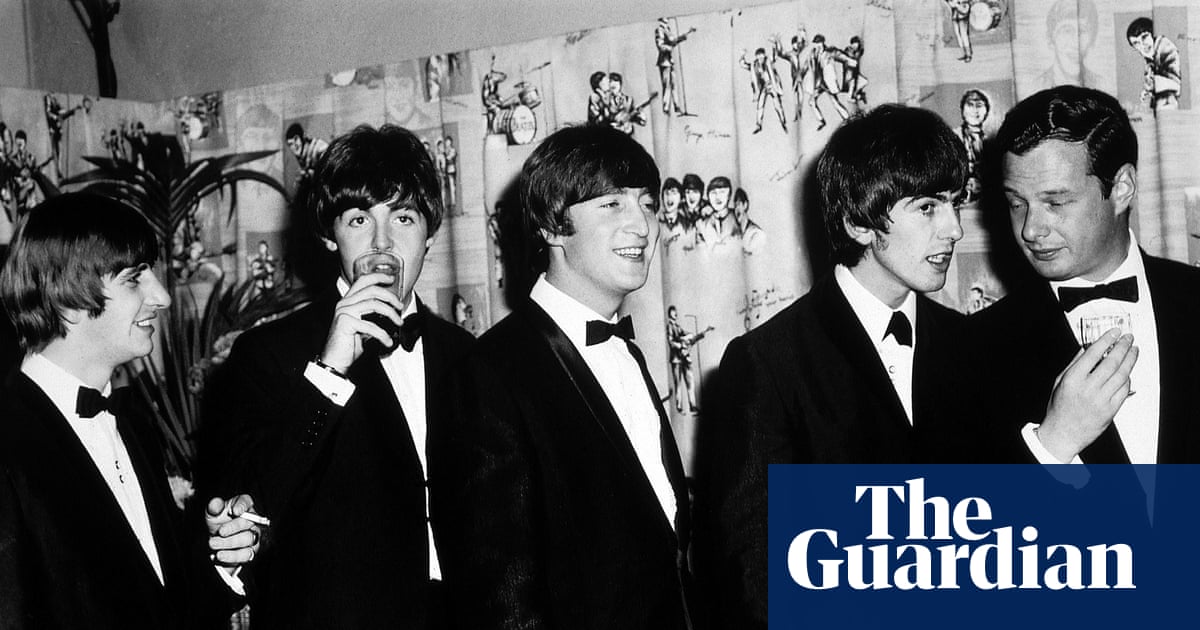
Despite his deep appreciation for the musical heroes who came before him, Gary Kemp is not a collector of rock memorabilia. But there, among the auction lots, was something that caught his eye: a 160x100mm black Twinlock binder that once belonged to the Beatles’ manager, Brian Epstein. The listing detailed 57 pages containing 404 entries, many handwritten by Epstein himself, cataloguing the social and business network of the Liverpudlian impresario in 1967, the year of his death.
Kemp immediately recognised this was much more than simply an address book: it was a who’s who of 60s London at its swinging peak, from David Bailey and David Frost to most of the Rolling Stones. I’ve got to hold it,’” he says. As the price quickly soared, so too did his determination.
After Epstein’s death, it had passed to his brother, then his nephew, and then one more sale before reaching the auction at Sotheby’s. For Kemp, owning it felt like the culmination of a lifelong fascination with the Beatles and a long-held admiration for Epstein, the man who discovered the group at The Cavern in late 1961. Kemp is talking from his study in an elegant five-storey Georgian townhouse he attributes, in part, to the inspiration and opportunities the Beatles gave him.
He was just leaving when Kemp thought to show him his latest purchase. It’s not a diary, but it tells you who your friends are, your family, your business acquaintances, the places you hang out. It’s quite telling of an individual’s personality.” Halfon was an auspicious person to show it to.
He had spent years fascinated by Epstein, developing a biopic of the manager with Jude Law attached to star, but it never came to fruition. Now, confronted with Epstein’s address book, and the revelatory list of contacts within, he saw a different story waiting to be told. This was Brian 360.” What followed was an exhaustive piece of detective work.
Name by name, Kemp scoured books, newspapers, magazines and online archives, trying to establish not only who each person was, but why they had crossed paths with Epstein. Meanwhile, Halfon was tasked with sourcing corresponding imagery. Some names proved straightforward, while others were little more than shadows they’d futilely chase.
Extract — continue reading at the source.