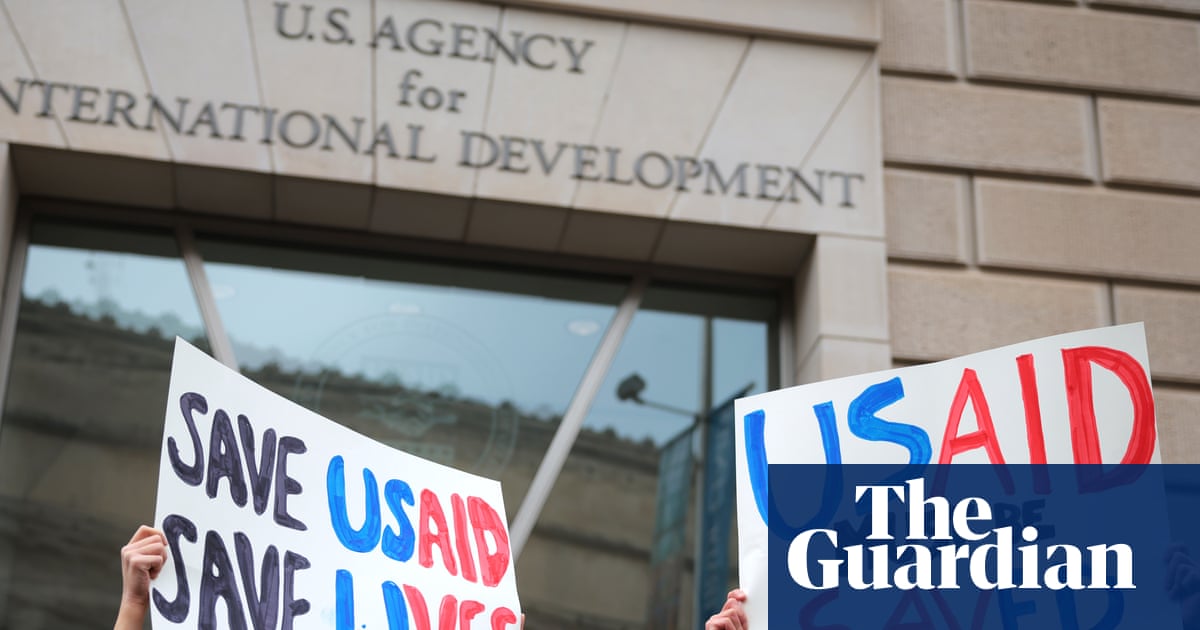
The United States’ withdrawal from key aid programs has put has put healthcare in Africa and the Global South “under growing strain” a new report warns. The report says the Trump administration’s cuts to programs such as US Agency for International Development (USAID), as well as the Covid-19 pandemic and rising costs of living globally have brought “new urgency” for the need to reform healthcare in the region. The report, titled A Sovereign Future For Health, was created by the Accra Reset, a global health initiative led by John Dramani Mahama, Ghana’s president, that believes countries in Africa and the wider global south should have greater control over their health development rather than being dependent on aid from western countries and international institutions.
A key statistic cited by Mahama and Accra Reset is that Africa produces less than 1% of its vaccines while carrying about 25% of the global disease burden. The report cites how abrupt changes to global health financing, such as the US withdrawal from several global health initiatives, forced countries within the global south to urgently restructure their finances. The report points to the Trump administration’s decision to dissolve USAID, which pushed Nigeria to absorb the 28,000 health workers who were previously employed by the agency at a cost of $200m.
External financing for health in Africa contracted by close to 70% between 2021 and 2025, the report notes, meaning that African countries historically dependent on aid were forced to adapt quickly. The withdrawal of the US Emergency Plan for Aids Relief (Pepfar) funding for South Africa, which provided over $400m a year annually and is credited with saving 26m lives globally since 2003, led to HIV clinics closing across the country. That left 1.4 million people living with HIV to face uncertainty about their treatment.
Such funding cuts caused “severe and devastating” disruption globally, according to research presented at the 26th International Aids Conference in Brazil earlier this year. At the World Health Assembly in May, Mahama said Ghana lost $78m following the closure of USAID programs which affected maternal healthcare, the treatment of malaria, nutrition and HIV/Aids interventions. The initiative’s latest report, published on Monday, comes amid these major cuts to international aid and growing pressure on countries to take greater ownership of their health systems.
Mahama refers to these aid cuts as a clear example that donor dependency is not sustainable. It is an argument for doing it differently and doing it better. As countries take greater ownership of their health futures, donor countries should step up to support that transition – following the lead of countries that set their own priorities, and work alongside them to determine where outside support is most valuable,” said Naveen Rao, senior vice-president of the health initiative at the Rockefeller Foundation.
It was in this context that we launched the Accra Reset and its Sovereign Health Agenda – to give renewed political force to the reform agenda and place the agency of countries of the Global South at its centre.” The report comes alongside a recent survey revealing the progressive attitudes many US citizens have towards foreign aid. Some 75% of Americans – including more than one in two (52%) who primarily support Donald Trump – agree that the US should restore disease prevention aid to contain the Ebola virus, according to polling of over 2,000 US adults commissioned by the Rockefeller Foundation. The polling also revealed that 65% of US adults support international cooperation even if it means compromising some national interests; 64% also believe Americans have a shared responsibility to others, including people in other countries whom they do not know.
Extract — continue reading at the source.


