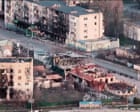
The phone message sent out of Russian-occupied Oleshky was grimly matter of fact: food for the 2,000 or so civilians still remaining in the city and its surrounding villages had finally run out. We’re going hungry … Right now, I’ve got absolutely nothing to eat,” read the message, from a woman in the besieged city, who was waiting to be evacuated by the occupying forces. Before the war, she weighed 110kg (17 stone); now she weighs just 67, she wrote.
The house where we stayed last winter was also destroyed and burned down. Just like our own home … We’re still alive.” Oleshky, across Dnipro River from the southern city of Kherson, has become “a hell on earth”, according to Ukrainians familiar with conditions there. Accounts of the dire conditions in the city emerged as the Ukrainian foreign minister, Andrii Sybiha, raised the situation in Oleshky at the UN general assembly in New York.
A “Save Oleshky” banner was lifted at a Ukraine-Hungary Nations League football match on Friday. In a statement published on Monday, Sybiha warned of a “humanitarian catastrophe” and called for an immediate evacuation, accusing Russia of standing as “the only obstacle”. Until May, food supplies were still getting through to residents of a city that had once been home to 24,000.
But since May, as the occupying Russian forces expanded minefields and drone cover, the trickle of supplies has entirely halted. Compounding the issue for civilians is the fact that Ukraine’s highly successful summer drone campaign against Russian supply lines has also caused shortages for the invading forces’ frontline troops – who in turn steal what little food Ukrainian civilians have managed to save. In messages shared with the Guardian, residents said they were down to one meal a day: soup without potato, made with courgette grown in what once were the flower boxes of the city’s apartment houses, sometimes with the addition of foraged purslane, an edible weed.
And come autumn, we’ll definitely die. I’m getting weaker by the day.” On 1 September a food convoy heading to the city was attacked. Moscow blamed the Ukrainian armed forces for the attack, while Kyiv blamed Russian troops.
Ukrainian officials say attempts to drop food by drones have done little to help: the supplies are seized by Russian soldiers and in at least one case the intended recipient was arrested. According to Tetiana Hasanenko, a Ukrainian official serving from the western side of the Dnipro as the head of the Oleshky military administration, issues began in earnest late last year as access to the city from the Russian side for Ukrainian civilians became ever more difficult. By winter, supplying food had already become very difficult.
Extract — continue reading at the source.