The Trump Administration on Monday repealed carbon pollution rules for coal- and gas-powered plants. And at the heart of the U.S. Environmental Protection Agency’s (EPA) explanation for its move is the long-debunked idea that, as the agency claims, “emissions from power plants have no material impact on global climate change” and that “the targeted emissions are global in nature, and any potential public health harms are too uncertain, conjectural, remote, and convoluted to tie specifically to the U.S. power sector.” The decision goes against decades of science proving that cutting pollution has myriad benefits for human and environmental health.
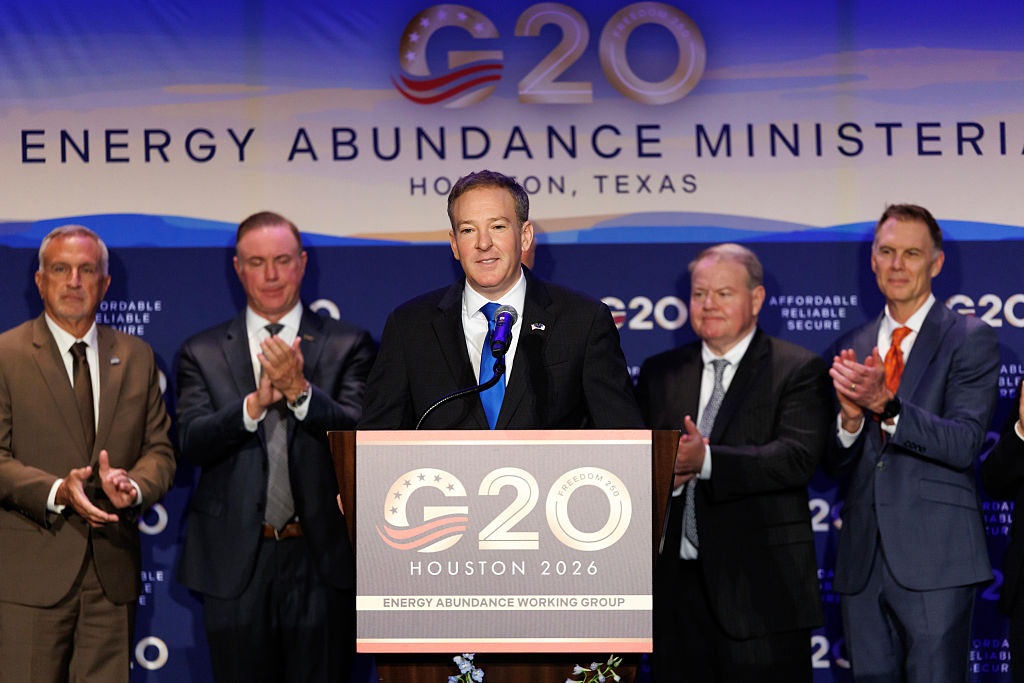
Administrator Lee Zeldin announced the move at the G20 Energy Abundance Ministerial in Houston, Texas, on Sept. 14. The will now hold a public hearing for the proposal over a 15 day period, and have a 45-day public comment period. The U.S. power sector is a major source of greenhouse gas emissions.
According to the most recent data, in 2024, the U.S. power sector emitted 1,427 million metric tons of carbon dioxide, the second largest U.S. source by sector. A report published by the Institute for Policy Integrity at the New York University School of Law in May 2025 found that if the U.S. power sector were its own country, it would be the sixth-largest emitter in the world. The move comes at a time when the United Nations warns that the world is set to overshoot the 1.5°C goal to limit warming—and that the world will reach 1.8°C of warming unless immediate changes are made to reduce global emissions and remove carbon from the atmosphere.
The EPA’s repeal concerns climate pollution standards originally finalized by the Biden Administration in 2024. The regulations applied to coal-burning plants in operation and any prospective gas-burning plants, and required coal plants to install technology to capture most of its carbon emissions by 2039 in order to keep operating, while gas plants would have been required to operate on cleaner fuels, like hydrogen. The Biden Administration predicted that the rule would have prevented up to 1,200 premature deaths, 360,000 cases of asthma symptoms, 48,000 school absence days, and 57,000 lost work days in 2035 alone.
It also projected up to $370 billion in climate and public health net benefits over the next two decades. The repeal of this rule is the latest in the Trump Administration’s attempts to roll back federal climate regulation. In February, the finalized its repeal of the endangerment finding, the landmark 2009 ruling that provided a legal underpinning for greenhouse gas regulation.
The agency also ruled that the Clean Air Act does not authorize the to regulate vehicle tailpipe emissions, and eased Biden-era restrictions on hydrofluorocarbons, polluting chemicals used in refrigerators and air-conditioning. The Trump Administration has also made a number of moves to keep polluting coal plants alive—even though coal is among the most costly power sources and the air pollution it generates has been linked to a number of adverse health effects, including increased risk of asthma and cancer. In February, the Energy Department ordered several coal-burning plants that had been slated for retirement to stay open.
Extract — continue reading at the source.