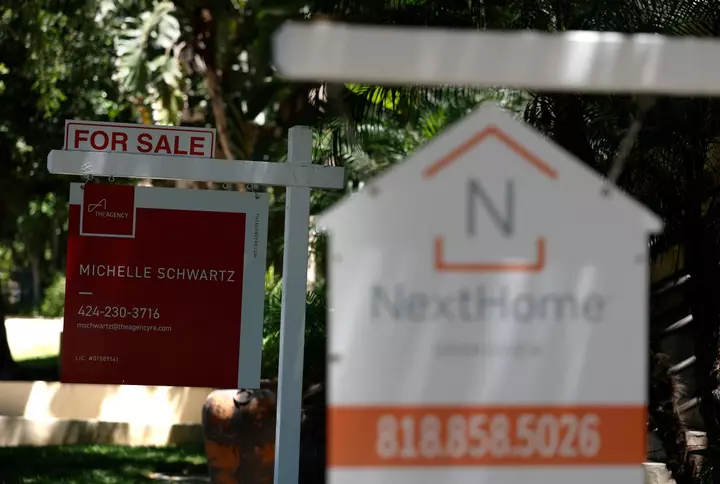
The U.S. housing market suffered a major setback in September as rapidly rising mortgage rates pushed prospective buyers to the sidelines. This could add yet another affordability headache for President Donald Trump and Republicans just weeks before the midterm elections. Pending home sales, which measure signed contracts to purchase existing homes, plunged 7.3 percent from August and 11.3 percent from a year earlier in September, according to National Association of Realtors data released Tuesday.
The decline coincided with a sharp increase in mortgage rates, which began September around 6.8 percent and reached 7.6 percent by the end of the month, according to Mortgage News Daily. The housing market will be at a standstill for some time to come,” Kevin Thompson, CEO of 9i Capital Group and host of the 9innings podcast, told Newsweek. Affordability has become one of the defining issues of the November 3 midterm elections.
Housing costs are particularly important to younger voters, and the economy more generally has been considered one of the most essential issues for registered voters. When it comes to housing, higher mortgage rates can quickly change what a household can afford even if home prices don't rise. Existing home prices also reached a median $417,500 in September, 1.3 percent higher than a year earlier and the highest recorded September price, according to National Association of Realtors data.
Trump campaigned in 2024 on lowering household expenses, including borrowing costs, and the president pledged during his campaign to deliver mortgage rates as low as 2 percent. Those rates haven't materialized and have actually gone in the opposite direction. Freddie Mac's average 30-year mortgage reached 7.40 percent in the week ending October 8, its highest level since November 2023.
The National Association of Home Builders' (NAHB) October reading fell to its lowest in 14 years, with current sales, expected sales and buyer traffic all declining “Housing remains squeezed by supply-side constraints and significant affordability challenges,” Robert Dietz, NAHB’s chief economist, said in a statement. However, sales were still 2.2 percent lower than a year earlier, and both August and September represented the slowest monthly sales rates of 2026. Housing inventory, meanwhile, increased 1.9 percent to 1.60 million homes, marking the highest inventory level since November 2019.
That's one reason economists aren't primarily blaming the weak housing market on a shortage of listings. "All of these factors are negatively impacting rates, and the results are some of the highest borrowing interest amounts many home buyers have seen in nearly two decades," Alex Beene, financial literacy instructor for the University of Tennessee at Martin, told Newsweek. "Unfortunately, there seems to be little that will change this any time soon.
Extract — continue reading at the source.