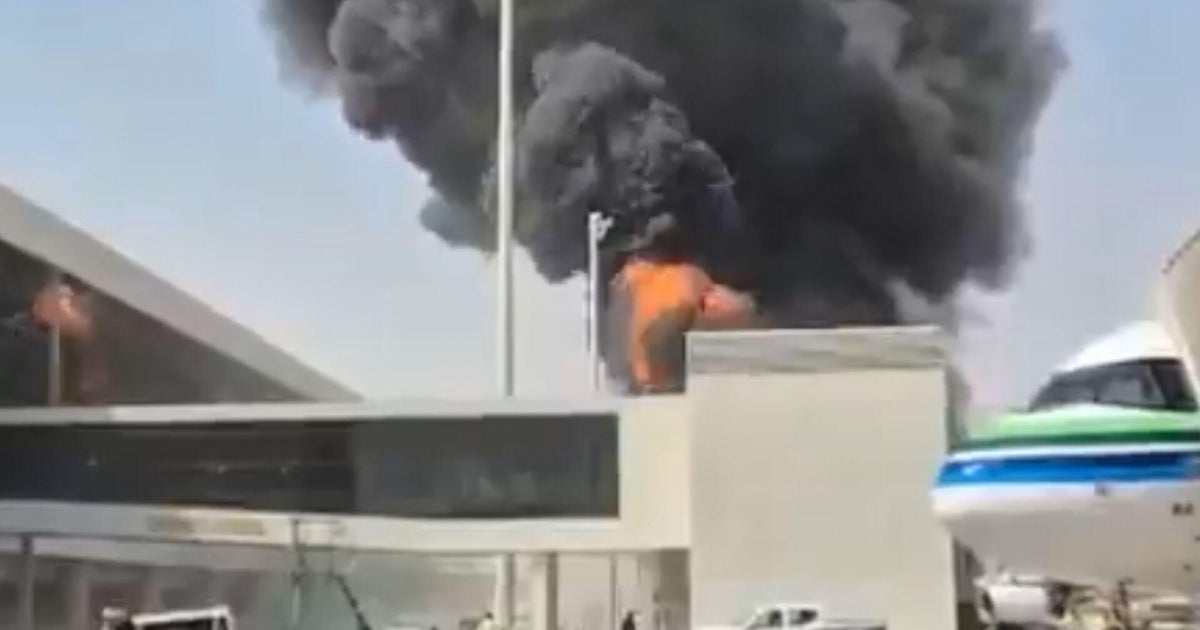
London — Yemen's Iran-backed Houthi rebels have dramatically upped the stakes in the complex Middle East war, killing at least 20 people — including an American — and wounding hundreds more with strikes on Saudi Arabia's airports over the last week. The question is whether President Trump will order U.S. military action in support of Saudi Arabia, which has been at war with the rebels in Yemen for more than a decade. Trump campaigned on ending wars, and he is likely aware, less than a month before the U.S. midterm elections, that opening a new U.S. front in the wider conflict sparked by the Feb. 28 joint U.S.-Israeli attack on Iran could be politically perilous.
If he did, he could argue that it is both to protect the Saudis, as a key U.S. ally, and to stop the Iranian proxy group from threatening global shipping in the vital trade routes of the Red Sea. Trump rejected a request last month by Saudi Crown Prince Mohammed bin Salman to join in the kingdom's strikes on the Houthis, two sources familiar with the matter told CBS News. He came close to ordering airstrikes against the group a week later, but again declined.
Asked Sunday if the U.S. would join Saudi strikes, however, the president replied: "We may. We're gonna look at it … We'll make a decision. We move very quickly." So, what has changed, and will it be enough to force Mr.
Little information has come out about the U.S. citizen killed in the Saturday attack on Riyadh's King Khalid International Airport, but the killing of an American may increase pressure on Mr. According to Nadwa al-Dawsari, associate fellow at the Middle East Institute, it may not be enough in itself, however, to spur the president to further entrench the U.S. in the wider regional conflict. "I don't think that the killing of an American will trigger a military response," she told CBS News on Monday.
"The Houthis have killed American civilians before, including detainees who died after being tortured by the Houthis in Sanaa, and that did not provoke a response from the U.S., militarily or otherwise. Trump's decision will likely depend on his broader assessment of the risks of further escalation." Oil prices may be one of the biggest factors in the president's calculus. He has vowed repeatedly to bring down prices at the pump, which have soared as a result of the war with Iran impeding exports from major Persian Gulf energy producers.
The Trump administration insists Iran has no control over the Strait of Hormuz, and more oil has been getting out of the Middle East from the Persian Gulf in recent weeks. But the Houthis hold significant territory along Yemen's Red Sea coast, which has enabled them to threaten vessels there and in the Bab el-Mandeb Strait, the southern gateway to the Red Sea and another key chokepoint for global energy supplies. If the Houthis are able to control Yemen's coastline, or enough of it to maintain their threat to shipping via the Bab el-Mandeb, it would put more pressure on energy flows, increasing the leverage Iran and its proxy groups have over global fuel prices.
Extract — continue reading at the source.