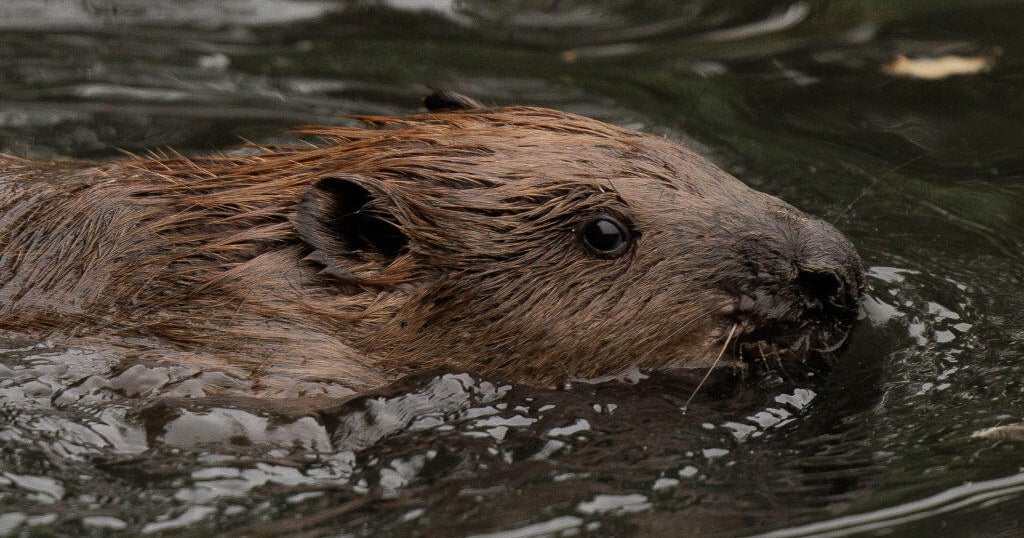
To find a little wilderness in West London, take a left at the shopping mall and head under the highway. Near a McDonald's and within reach of the city's busy transport network, a family of beavers is reshaping a wetland and helping protect nearby streets and a Tube station from flooding. Five Eurasian beavers were released into the town of Greenford in October 2023.
They were the first to return to West London in about 400 years, part of an effort to bring back a species hunted to extinction centuries ago. The animals live within a fenced site that remains accessible to the public. Veterinarian and conservationist Dr.
Sean McCormack, one of the driving forces behind the Ealing Beaver Project, puts the chances of spotting one during a recent visit at 90%. "Anytime from now you could see a beaver swimming across the lagoon here," he said. But these animals were brought here to do more than draw an audience.
The area around nearby Greenford Station had suffered repeated flooding during heavy rainfall. Local authorities were considering engineering works to hold back water before it reached the urban area downstream. McCormack and his fellow conservationists proposed a different approach: let beavers help manage it.
"They had planned a lot of expensive engineering works to create reservoirs to hold more water," he said. "And we said beavers could do that at a fraction of the cost and maybe more effectively." The beavers got to work, felling trees, gathering branches and building dams. By July this year, they had constructed seven dams and created three ponds that help retain water.
Their engineering changes how rainfall moves through the landscape. Instead of rushing downstream, water is held in ponds, spread across the wetland and released more slowly. The results came sooner than expected, McCormack said.
Extract — continue reading at the source.