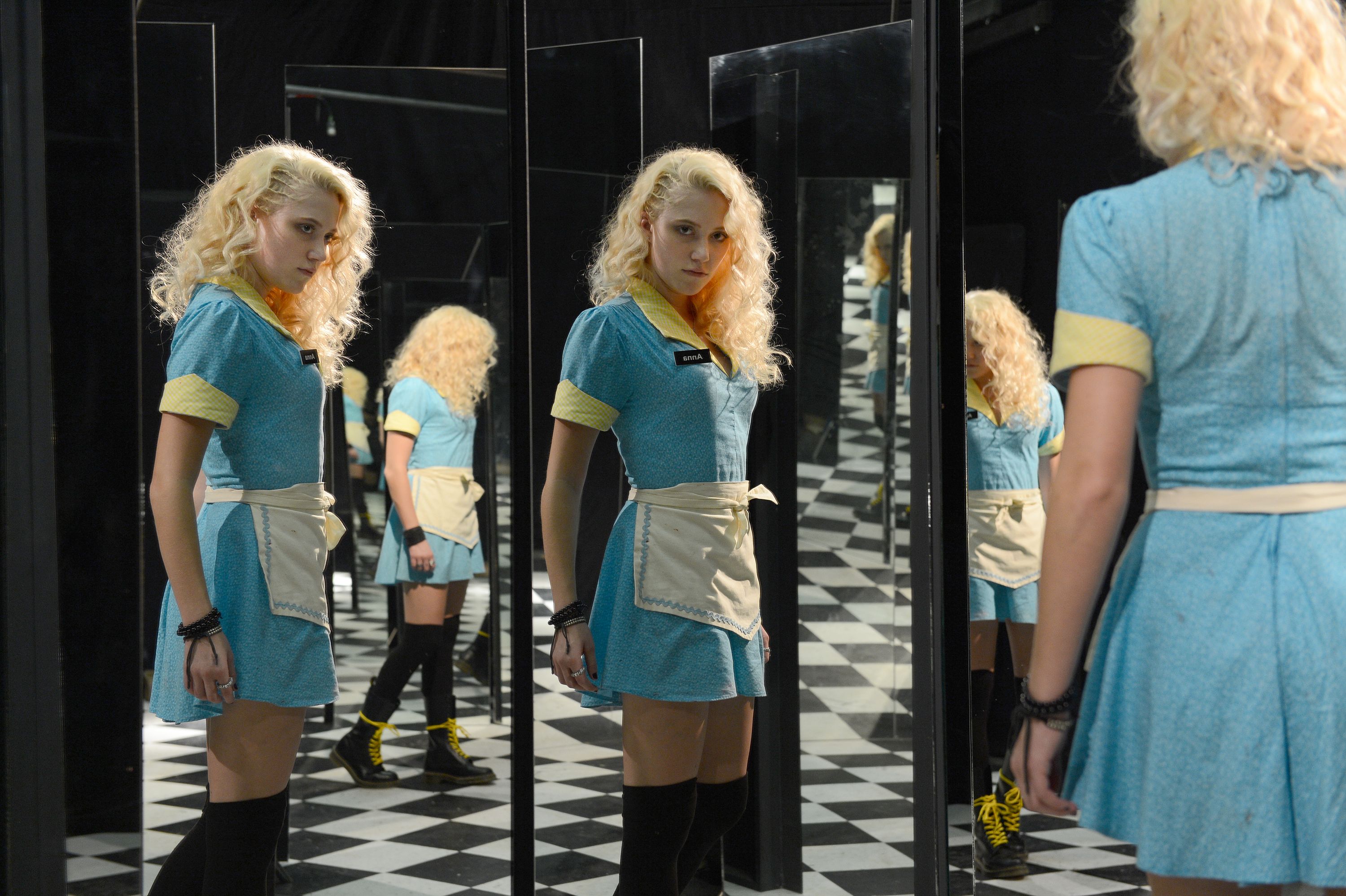
Part of the thrill of theater is that you’re taking part in a one-time experience, never to be recorded or repeated, in which anyone who wasn’t part of that live audience with you will simply have to take your word for how it was. Still, you may seek out clues about whether your experience of the show was widely shared or unique to you — taking note of how the audience is audibly responding, or listening in on mid-point reactions in the restroom during an intermission, or looking over at a companion and comparing notes on the ride home. But what if there were no other audience members? (As in, deliberately… not because it was a night of badly promoted equity-waiver theater.) No friends or strangers to share immediate laughs or gasps with, let alone notes afterward?
Just a small cast of actors and you, paying for the privilege of being an audience of one? Add to this the idea that the play — about which you’re meant to know little in advance, beyond the fact that it may involve supernatural elements — takes place in a secret location, revealed only at the last minute, and even then not through anything so obvious as an actual street address. For anyone with a shy bone in their bodies, it can sound a little intimidating, knowing a band of actors is going to collectively train its sole attention on you, even before getting to the scariest aspect of all: There will be audience participation.
That, in the most basic outline, is what you needed to know about “The Pineapple,” an immersive theater production that just wrapped up a 76-performance run — for, you guessed it, a total of 76 audience members — in North Hollywood. It was put on by a company called Candle House, which, though little-known as of yet in the theatrical mainstream, has enough of a cult national reputation that nearly all of the 76 shows sold out pretty much just on word of mouth, at $247 a pop. (These sellouts occurred even before the show got its first piece of substantial L.A. press, via a slightly unnerved Los Angeles Times review that was published late into the Sept. 15-Oct. 5 production.) There are no immediate plans to bring “The Pineapple” back — which allows us to get into spoilers — but suffice it to say that this was a big enough hit, on its own strange scale, that Candle House’s next L.A. production will arrive with a much, much bigger profile, even if what they do naturally benefits from a sense of being on the down-low. I attended one of those shows… although, already, “attended” feels like the wrong word for a production in which there are very few moments over the course of an hour where your participation can be considered passive.
There is no way to overstate just how subjective everyone’s experience must have been, but right off the bat, I can state a few things: (1) I thought I was understanding what was going on in the show’s narrative, until I arrived at a point of being fairly baffled. (2) I didn’t mind the bafflement so much; confused or no, I had one of the best times I’ve ever had in a theater production. (3) I felt so disoriented after coming out, in a pleasantly buzzed kind of way, that I proceeded to drive down Lankershim Blvd…. and then keep driving for quite a way, blocks past the freeway on-ramp that was supposed to take me home, because I was somewhere else. A review doesn’t get better than that, right? I should also mention that I can easily imagine people for whom participating in “The Pineapple” would be, like, one of the worst nights of their lives… although I don’t imagine them being the types of people who would take a chance on spending $247 for something that sounds spooky and potentially challenging, so the self-selection probably works out fine.
I did a debriefing days after the show with Candle House founder Evan Neiden (who was also, I didn’t realize til our phone call, one of the actors I’d been interacting with). One of the first things I asked him was whether any of the audience members in this or their other productions has ever used the “safe word” that will end the show. Not surprisingly, he said it was very rare and that most ticket-buyers have a good idea that a show like this will make some demands of them.
Ultimately, what I’ve taken pride in is hearing that regardless of how people felt about it, that they’ve never experienced anything quite like it. Even if they had seen a lot of experimental theater, maybe the themes in this were different, for instance… Most people that I’ve spoken to have found it in equal measure scary and silly, and maybe cathartic, and that’s the best-case scenario for me. I’ve seen shows that I thought would be 100% up my alley, and then I saw them and it was maybe not so much, versus seeing something that seemed totally out of left field but like, ‘Oh, give it a shot,’ because I heard something good, from someone I trust.
Extract — continue reading at the source.