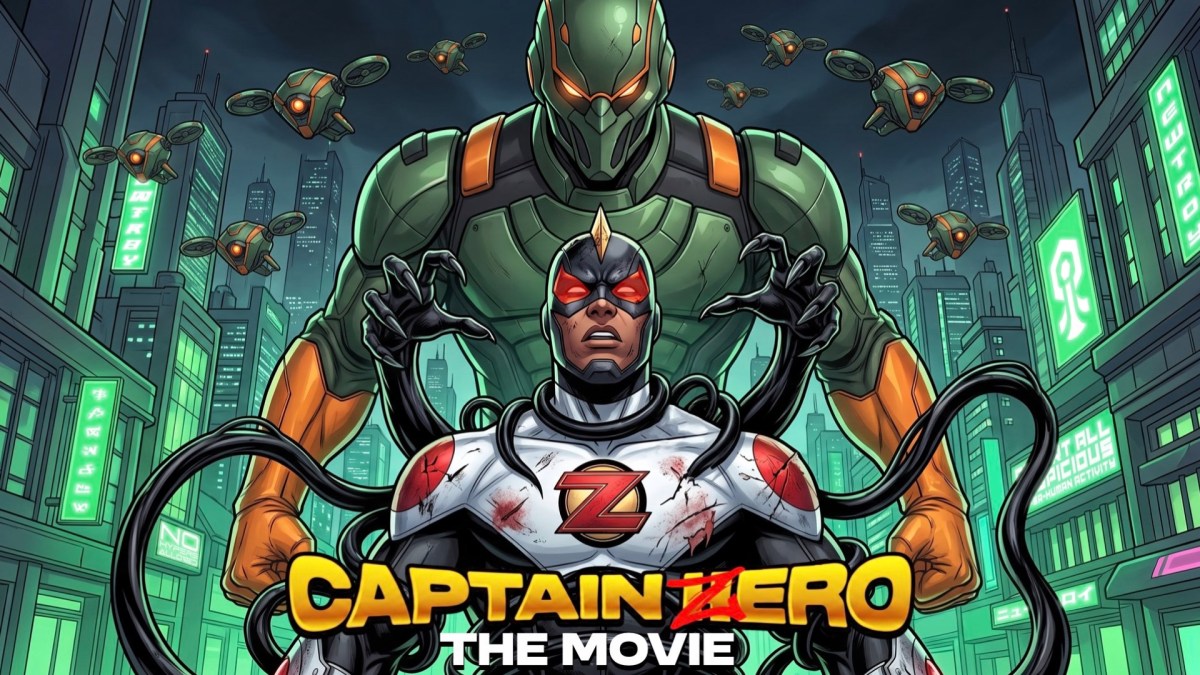
When Z Cher-Aimé created Captain Zero in 2015, they were 18, newly in college, and still learning to describe an experience many around them couldn't see. A year earlier, they had been diagnosed with major depressive disorder. During a severe episode, they began imagining a window into the mind of a Black teenager whose inner life carried the stakes of a superhero battle.
Cher-Aimé remembers hearing Engco’s writing sample and thinking, “Hold on, wait a minute. I think there might be a little competition in this class.” That thought sparked a partnership built on mutual respect, which went on to form Cutting Edge Animation. Cher-Aimé had envisioned a contemporary successor to Static Shock, while Engco brought a taste for The Wire, Breaking Bad and The Sopranos.
Their fusion sharpened the premise: Xerxes Hughes, a teen hero living in New Troy City, recounts his crises in therapy while his depression assumes a physical form. What if it’s about his depression? What if we frame it through his therapy sessions?” The model became Spider-Man 2, which Cher-Aimé calls “a character drama that happens to have superheroes in it.” Engco’s perspective broadened the project, though the collaborators kept a grounded focus on Black life, family expectations, social pressure and the private cost of public heroism.
Their method still carries a playful tension: Engco asks, “What if?” and pushes toward chaos, while Cher-Aimé pulls the idea toward structure. In an increasingly AI-focused age, both filmmakers leaned into a traditional approach. For the duo, hand-drawn 2D animation carries a familiar memory and texture.
The look recalls Saturday-morning cartoons and 1990s anime, but the storytelling leans toward adult prestige drama, where violence, therapy, and moral compromise can coexist in the same frame. It’s refreshing to see drama animated in 2D.” Cher-Aimé wanted viewers to approach the material with the same seriousness they would give live action. There are real things happening,” they said.
The feature will expand Xerxes’ school life, home life, friendships and relationship with his mother, while answering the cliffhanger posed by Into the Abyss Part II. Cher-Aimé reached out to Angelica Ross after drawing a character with her voice in mind; she responded, asked for materials and helped move the project toward representation. When an agent heard Cher-Aimé’s temporary performance as Xerxes, the placeholder became a role.
Extract — continue reading at the source.