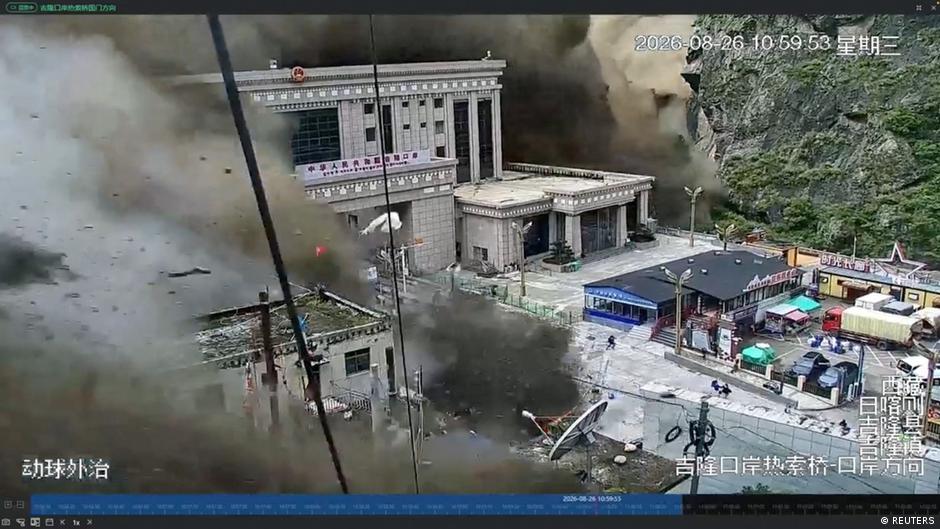
When a catastrophic flash flood swept through the rugged China-Nepal border on August 26, the physical devastation was immediate. In Nepal, a black torrent of mud and rock tore through communities, leaving hundreds dead and thousands more missing along the borderlands. But across the frontier in Tibet, an autonomous region of China, the physical disaster was almost instantly mirrored by a digital one: the rapid, high-tech erasure of the catastrophe's visual evidence.
As survivors tried to upload raw footage of the deluge, China's state-backed information control apparatus swung into action, executing a sophisticated, precision operation to shape the public narrative and bury inconvenient truths. The contrasting realities — a tragic humanitarian crisis in Nepal and a tightly sanitized, triumphant rescue narrative in China — reveal the evolving mechanics of Beijing's modern censorship machine. Rather than imposing a blunt, blanket blackout, authorities deployed advanced image-recognition technology and "saturated information" tactics to drown out domestic scrutiny while deflecting diplomatic friction abroad.
In the immediate aftermath of the flood-triggered mudslide, local residents captured dramatic footage of the torrent engulfing Gyirong Port, a critical overland trade hub between China and Nepal. The most striking video showed a black wall of water and debris crashing into and destroying the border crossing's massive "National Gate." In an article titled "An Unrecorded Mudslide Rushes into Gyirong Port" on WeChat, a universal app that combines messaging with payment options and social media functions, local blogger "Matou Qingnian" described the chaotic scene. "The most terrifying moment happened at the Gyirong Port," the author wrote, describing video footage of crowds, including children, fleeing in panic before a pitch-black torrent swallowed the camera's view.
Within hours, both the article and the raw video footage vanished from Chinese social media. According to China Digital Times (CDT), an independent watchdog that tracks Chinese internet censorship, the video of the collapsing "National Gate" was systematically blocked from being shared on WeChat, even in private messages. "The footage itself contained no graphic violence, no protests, and no political slogans," explained Mira, a CDT editor who specializes in tracking sensitive keywords and media.
"The target of the censorship was the symbol itself: the National Gate." Digital analysts note that this censorship highlights a significant upgrade in China's internet policing tools. Instead of merely filtering text-based keywords, platforms now rely heavily on video fingerprinting, image hashing, and machine-learning models to recognize specific visual scenes. Once a visual sequence is blacklisted, it is intercepted before it can ever be posted.
The suppression of the Gyirong Port disaster reflects a broader shift in Beijing's strategy: from mass deletion to "precision surgery" and narrative flooding. A search for "Tibet mudslide" on Xiaohongshu — China's popular lifestyle and search platform — reveals the mechanics of this "saturated information environment." Rather than showing an empty search page, the platform's algorithm feeds users a carefully curated stream of state-media reports from China's state broadcaster CCTV and news agency Xinhua. The visual landscape is dominated by high-resolution, sterile graphics: "before-and-after" comparisons, maps of high-altitude glacial collapses — the official scientific cause of the disaster — and state-approved aerial drone footage.
Extract — continue reading at the source.