Over the last half a century, Chinese spies have taken aim at a wide swath of California targets. They have worked as a Boeing aerospace engineer and a naval engineer at defense contractor Power Paragon to obtain highly classified information on U.S. space shuttle and Navy projects. They have assumed the roles of electrical engineering professor at UCLA and software engineer at Google and even worked as a driver and aide to the late U.S.
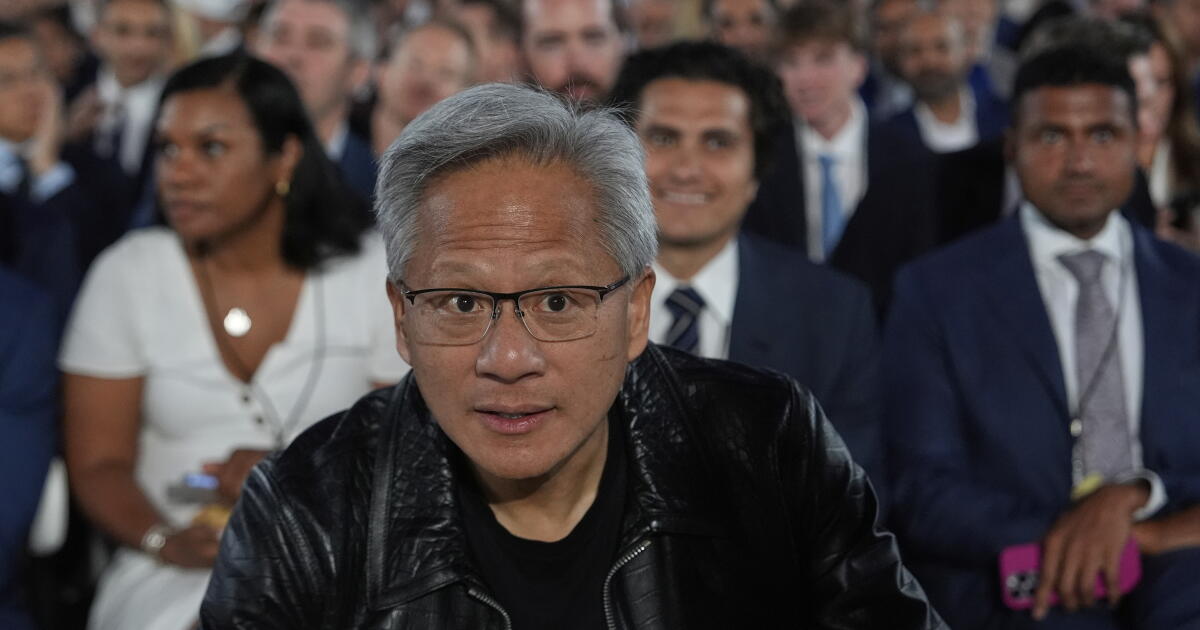
Dianne Feinstein when she chaired the Senate Intelligence Committee. Intelligence experts say that China continues to ramp up its network of spies and assets across California, as underscored this week after Nvidia Chief Executive Jensen Huang admitted he was embroiled in an extramarital affair when allegations surfaced that he had a relationship with a suspected Chinese spy. Their counterintelligence strategy is not only about stealing secrets today; it’s about securing strategic advantages tomorrow.
They recognize that human vulnerabilities (sex, money, ego and ambition) can be crucial when it comes to them attaining this quest for global dominance.” For China, California is a key espionage hub because it combines three attractive targets: advanced technology industries, major research universities and a large concentration of scientists, engineers and entrepreneurs, according to William Hannas, lead analyst at Georgetown’s Center for Security and Emerging Technology. China’s main objectives are to accelerate its technological development, reduce dependence on foreign suppliers and achieve leadership in strategically important fields, including artificial intelligence, Hannas said. For the U.S., Shih said, guarding against Chinese spies involves a delicate balance.
Officials must avoid politicizing the issue in such a way that they cast suspicion on Chinese scientists or Asian Americans based on race and ethnicity. Already, many Chinese people working for California companies feel like they are being targeted, he said, and some complain the suspicion means they are passed over for promotions. And there have been high-profile cases of Asian Americans unfairly accused of spying.
The worst thing that could happen, and is somewhat happening now, is that a witch hunt in the U.S. drives many otherwise totally innocent scientists to China, and ends up helping China to develop technologies that one day will replace U.S. technology or even challenge U.S. military superiority.” Beijing’s leaders are seeking to catch up with — and eventually surpass — the U.S. in the frontier spheres of defense, aerospace and technology. Increasingly, China is also positioning assets in California to launch cyberhacking attacks and seek political influence and spread propaganda, intelligence experts said. Gaylord, who led multiple counterintelligence operations in California, said Chinese spies and agents are everywhere in the state, infiltrating private companies and even government offices.
As some spies adopt the ancient espionage practice of honey potting, using sexual or romantic allure to extract sensitive information, Gaylord frequently delivers a blunt warning to California’s tech bosses. According to declassified FBI interviews, disgraced former U.S. Eric Swalwell told investigators in 2015 that he had sexual relations a handful of times with Christine Fang, a suspected Chinese spy.
Extract — continue reading at the source.