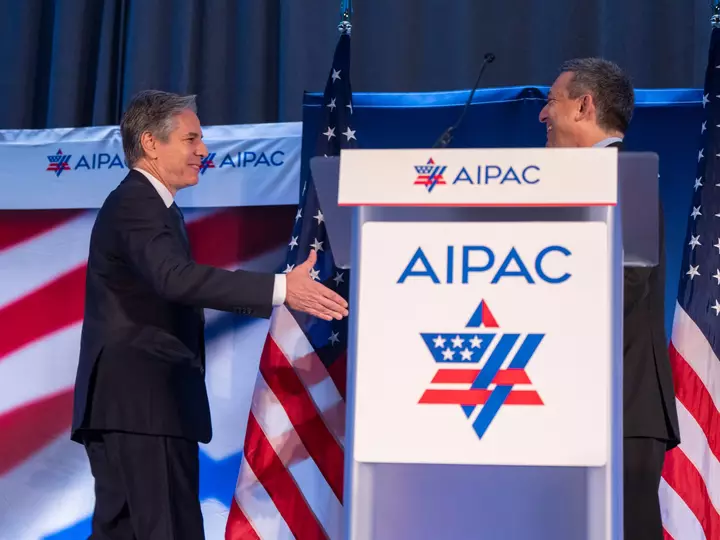
Nearly a year before he stunned many by winning a seat in the United States Senate from Texas, James Talarico drew attention for his vehement rejection of campaign funding from the country’s largest pro-Israel lobbying group, the American Israel Public Affairs Committee (AIPAC). Pro-Israel groups allied with AIPAC gave modest support – about $6,000 – to Talarico’s opponent, Ken Paxton, but Talarico’s willingness to be so open about his disdain for AIPAC is still a notable part of a shift in US politics. In races across the country, AIPAC and political spending groups linked to it poured tens of millions of dollars into backing one candidate or another.
While the group did back many winning candidates, nearly two-thirds of the total money it spent this election cycle went to those who ended up losing. Even among Republicans, candidates are thinking twice about taking funds from the group, said Rina Shah, a geopolitical adviser and strategist and a former senior GOP congressional aide. In October, for instance, the group said it would stop endorsing candidates and making direct contributions to them after this election cycle.
Much of its spending already runs through affiliated political action committees, such as its super PAC, the United Democracy Project (UDP), making donations harder to track. AIPAC has funded hundreds of candidates in the midterm elections, in both primaries and the general election on November 3, according to Track AIPAC, an organisation that records the group’s funding of US politicians. The organisation tabulates spending by UDP as well as nearly 50 other PACs tied to the pro-Israel lobbying group.
On November 4, the day after the Democratic Party roundly defeated Republicans and won control of both the House and Senate, AIPAC said it had already counted some 234 candidates it backed, from both parties, as having won their contests. In terms of the number of winning candidates, the group still has a strong record. Pro-Israel groups like AIPAC and UDP backed candidates in at least 32 of 35 Senate races this election, according to Track AIPAC.
In 26 of those races, the groups spent more than $100,000 on a candidate, and 21 of those candidates won their races on November 3. But nearly two-thirds of the total money pro-Israel groups spent in the midterm elections went to candidates who lost, according to a tally by the Quincy Institute for Responsible Statecraft. Around $55m of the $84m that AIPAC, UDP and linked groups spent in the election cycle went to candidates who did not win, according to the findings.
You also have a new reality now in which candidates find AIPAC’s donations toxic and are rejecting it.” The most notable race in which an AIPAC-backed candidate lost was for a Senate seat in Michigan, where the group and affiliated PACs spent some $30m on Representative Haley Stevens, a Democrat who unsuccessfully sought the party’s nomination for the contest. According to the New York Times, AIPAC then poured an additional $9m into backing Republican Mike Rogers, who lost on November 3 to Abdul El-Sayed, an outspoken critic of Israel who has called for the US to stop giving financial support to the country. In Maine, AIPAC-linked groups gave more than $4.8m in support of Senator Susan Collins’s re-election campaign.
Extract — continue reading at the source.