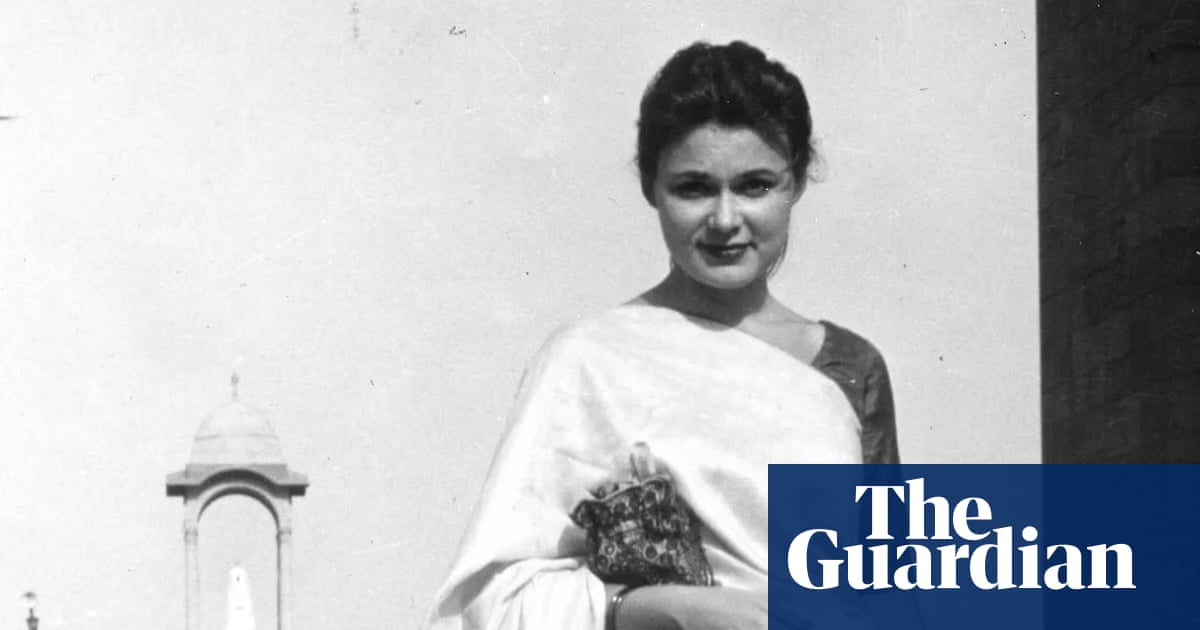
When Gloria Steinem’s plane touched down in Bombay in 1957, she could not have known that her stay in India would become what she later called a “pivotal, life-dividing event [that] made me who I am”. She was 22, with a degree in government from Smith college and was travelling on a Chester Bowles fellowship. India was “not only a place I’d always wanted to go, but (also) an escape from a very kind and tempting man to whom I was engaged and knew I shouldn’t marry,” Steinem later wrote.
The prospect of marrying Blair Chotzinoff, a pilot from a well-connected New York family, depressed her “enormously because marriage meant the end of life to me”. Funds were short, so she wangled a free airline ticket in exchange for an article “that I still feel guilty to this day because I never wrote”. While in London waiting for her Indian visa, she discovered she was pregnant and obtained an illegal abortion – an experience that underpinned her conviction that, without control over reproduction, women could not control their own lives.
Steinem, who died this week at the age of 92, arrived in Delhi with romantic expectations of “ageless beauty and jewelled elephants”. They were quickly displaced. Driving from the airport, she had what she called her “first glimpse of Asian poverty”, seeing people sleeping on pavements and doorsteps.
She lived at Miranda House, one of Delhi University’s leading women’s colleges, immersing herself in student life. Steinem’s Indian years have been extensively documented by Rashida Shafiq of Southern Methodist University, who drew on her fellowship reports and other archival material for a recently published PhD thesis. She adopted the sari as everyday dress, writing: “Saris make one stand straighter and walk more slowly and worry less about time and efficiency.” India was not entirely unfamiliar territory.
Her mother and paternal grandmother had been Theosophists, part of a spiritual movement that drew heavily on Hindu and Buddhist ideas such as karma and reincarnation, and at college Steinem had written a paper on the Communist party of India. When her fellowship money ran out, she supported herself by writing for Indian newspapers, doing advertising work and taking occasional modelling jobs – including posing in saris. Wider travel in the country brought some of her most important encounters.
She met Rajkumari Amrit Kaur, the former princess and follower of Mahatma Gandhi who became independent India’s first health minister, and spent two hours with Indira Gandhi, whom she described as “shy to uncertainty, gentle and a little whimsical”. At a Radical Humanist study camp in Mussoorie, followers of the former communist MN Roy debated democracy, individual freedom and political organisation. Steinem later said she learned there that “radical” need not mean violent or extremist, but could mean “going to the root,” and that “the means we choose dictate the ends we achieve”.
Extract — continue reading at the source.