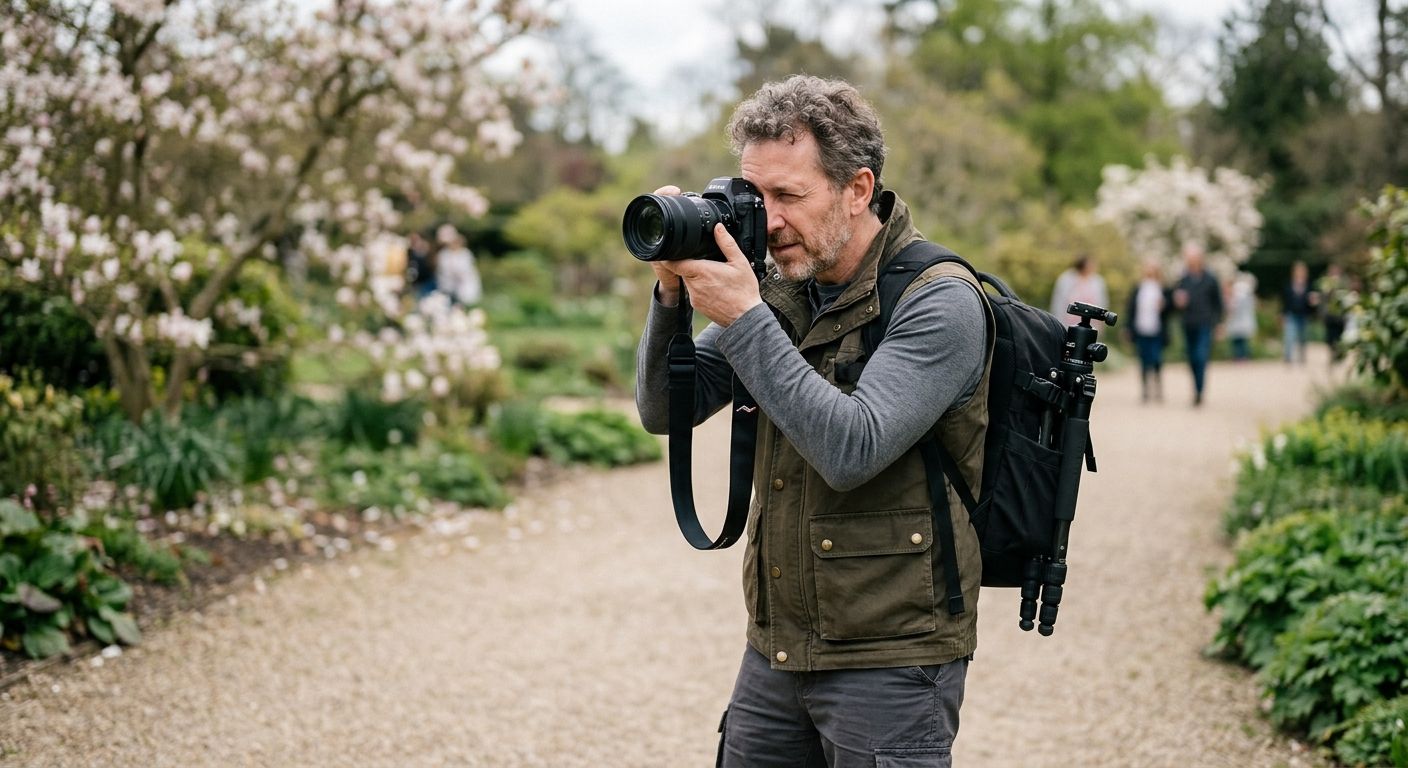
August 19 is celebrated around the world as World Photography Day, a day dedicated to an art form that has fundamentally changed the way people document history, preserve memories and see the world around them. The observance was initiated by Australian photographer Korske Ara in 2009 and was first celebrated internationally in 2010. The date has a direct connection to one of the most important milestones in the history of photography.
On August 19, 1839, the French government publicly announced the details of Louis Daguerre's daguerreotype process after acquiring the rights to the invention and making it available to the public. The invention was presented as a "gift to the world" and helped photography move from an experimental technique toward a technology accessible to a much wider audience. Daguerre was not, however, the first person to create a permanent photographic image.
French inventor Joseph Nicéphore Niépce had produced one of the earliest surviving permanent photographs in the 1820s. His experiments laid the groundwork for later developments, while Daguerre's work helped make the process more practical. The daguerreotype used a silver-coated copper plate to create an exceptionally detailed image.
Each photograph was a unique object rather than a negative that could easily be used to produce multiple copies. Despite this limitation, the technique represented a major breakthrough and played a crucial role in the early history of photography. Photography continued to develop rapidly throughout the 19th and 20th centuries.
Scientists and inventors experimented with new materials, lenses, chemicals and exposure techniques, gradually making cameras more practical and photographs easier to produce. In 1861, Scottish physicist James Clerk Maxwell demonstrated an early method of producing a color photograph, marking another important step in the development of the medium. Another major transformation came with electronic and digital technology.
The development of electronic still cameras in the late 20th century eventually paved the way for digital photography, eliminating the need for photographic film and chemical processing. With the arrival of smartphones, photography became part of everyday life, allowing almost anyone to capture and share images within seconds. Despite the dominance of digital technology, film photography remains popular among many professional and artistic photographers.
Extract — continue reading at the source.