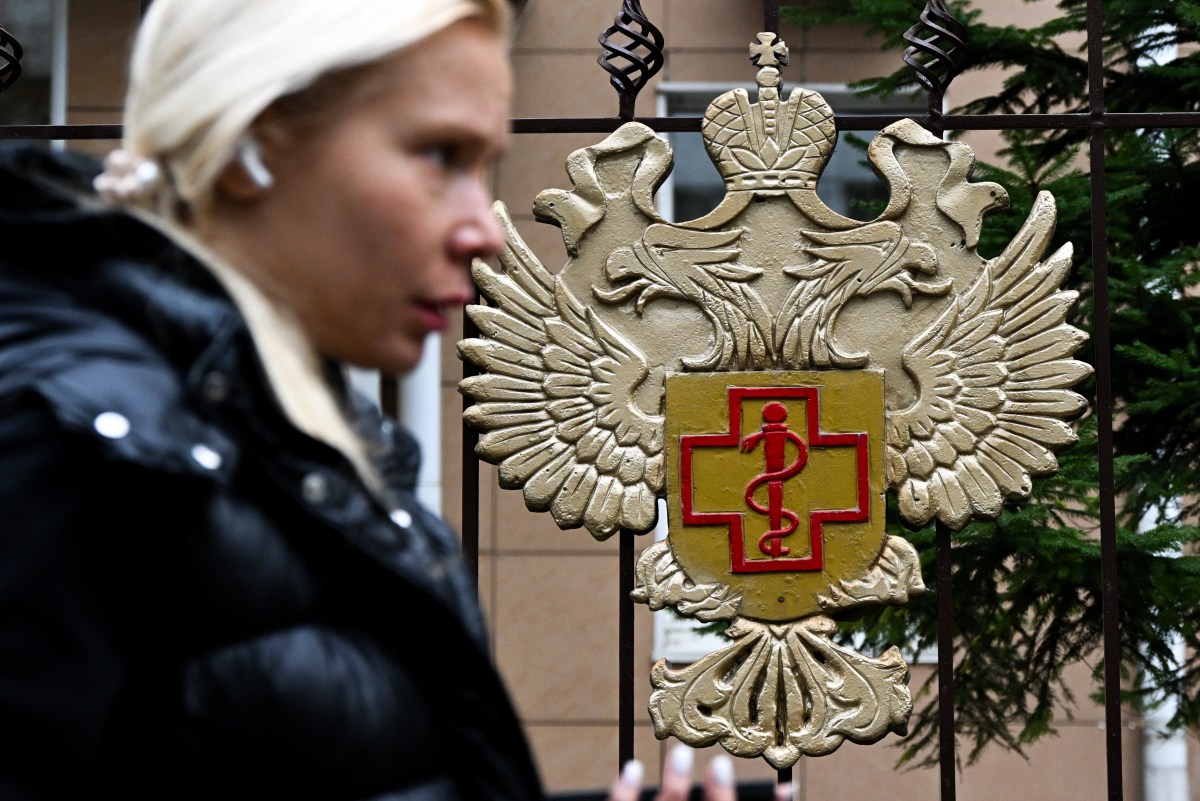
Health guidance highlights key differences between plague and other serious infectious diseases after a Russian lab worker reportedly died from a suspected case of the disease. A Department of Health and Human Services spokesperson told Newsweek on Monday that the Centers for Disease Control and Prevention (CDC) was “closely” monitoring the situation with its interagency partners. As Newsweek reported, Russian media sources said that a woman who worked for a plague research institute near Irkutsk in Siberia was hospitalized and later died, after she told colleagues she had inadvertently broken a test tube with live bacteria while collecting samples.
The woman was named by independent Russian language outlet People of Baikal as 28-year-old Darya Shipilova. Russian health watchdog Rospotrebnadzor said Sunday that the Irkutsk Anti-Plague Institute employee had been diagnosed with “pneumonia of unknown etiology.” Testing had not identified microorganisms associated with her work, the statement added. Axios reported on Sunday that the White House was monitoring reports and related quarantines.
It said that health authorities in Russia have taken precautionary measures in response to the woman’s death but had not confirmed she contracted the plague. Newsweek contacted the World Health Organization (WHO) and Rospotrebnadzor for comment on Monday. The CDC lists the common forms of plague as bubonic, pneumonic and septicemic, and says its symptoms depend on how a person is infected.
Pneumonic plague is the most serious form of the disease and the only form that can be passed from one person to another, according to the agency. Its symptoms include fever, headache, weakness, a rapidly developing pneumonia with shortness of breath, chest pain, cough, as well as sometimes bloody or watery mucous. Pneumonic plague develops either when bacteria from untreated bubonic or septicemic plague reach the lungs or when a person inhales infectious droplets coughed into the air by an infected person or animal, the CDC says.
Bubonic plague symptoms include fever, headache, chills and weakness and one or more swollen, painful lymph nodes, called buboes, according to the agency, while symptoms of septicemic plague also include fever and chills, along with extreme weakness, abdominal pain and shock. Bleeding into the skin and other organs, is also possible, and tissues, including skin, can blacken and die—especially on fingers, toes and the nose, the agency adds. According to the WHO, the plague has a case-fatality ratio of 30 percent to 100 percent if left untreated.
"The pneumonic and septicemic forms are invariably fatal unless treated early," it says. Ebola disease is a rare but severe illness that can often be fatal, according to the WHO. It is caused by viruses that can get into the human population when individuals have close contact with the blood, secretions, organs or other bodily fluids of infected animals, as well as through direct contact with an infected person’s blood or bodily fluids.
Extract — continue reading at the source.