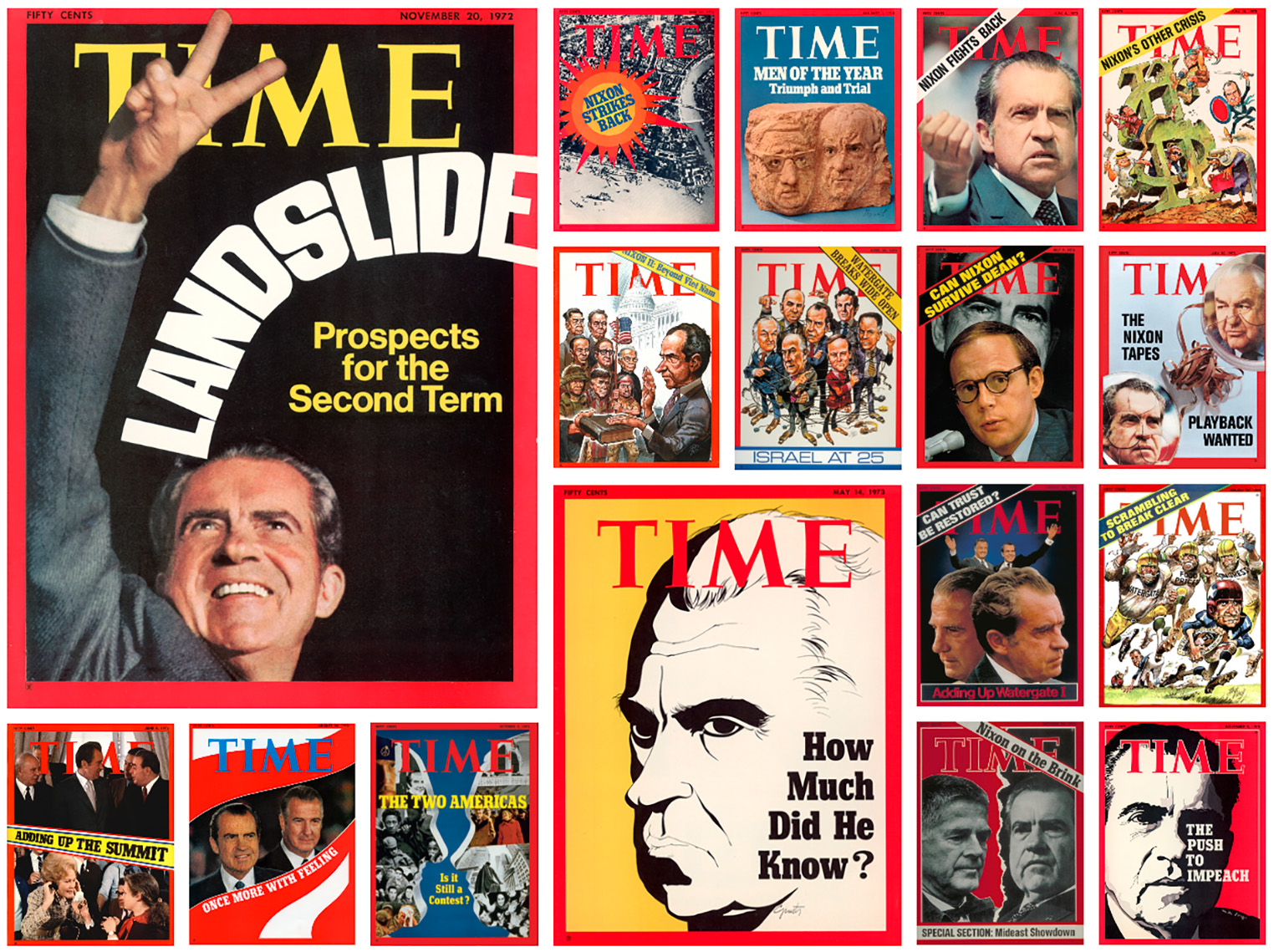
Berating reporters, revoking credentials, suing news organizations—hardly a week goes by without Donald Trump’s attacking the press. An experienced commander of headlines and inveterate consumer of media, he cajoles journalists one day and harangues them the next. But the man who preceded Trump as the President to appear most often on the cover of TIME reigned supreme in media manipulation too.
Well before Trump railed against fake news, Richard Nixon waged a sustained campaign to intimidate and punish those who covered him. Read more: How Donald Trump Has Appeared on the Cover of TIME More Than Anyone Else The relationship between Presidents and the press is inherently adversarial. Since the emergence of a modern mass media and a professional White House press corps in the early 20th century, Presidents have sought to use journalists to disseminate their ideas, goals, and achievements—and have treated coverage that deviates from their spin as misleading, hostile, or malicious.
Reporters, on the other hand, while recognizing their duty to relay what the President says and does, believe that they can offer a fuller, more accurate account of events than the White House does—by adding context, checking facts, and airing dissenting views. In that difference of perspective lies a recipe for conflict. Every President has warred with journalists.
Theodore Roosevelt sued Joseph Pulitzer’s New York World for alleging corruption in the purchase of the Panama Canal. (He lost.) Franklin Roosevelt instructed an impertinent correspondent to don a dunce cap and stand in the corner. Dwight Eisenhower baldly lied to the press after the Soviet Union shot down an American spy plane. Barack Obama tried to exclude Fox News from an interview with the other TV networks and used the Espionage Act to pursue leakers.
But, at least until Trump, no other President had a more contentious relationship with the media than Nixon. By the time he took office in 1969, the White House–press relationship had grown sharply combative, thanks to the Vietnam War, Lyndon Johnson’s “credibility gap,” and the cultural upheavals and suspicion of authority that marked the 1960s. Journalists took it for granted that Nixon, with his long history of resenting the press, had nefarious designs on neutering the Fourth Estate.
The venerated CBS anchorman Walter Cronkite labeled Nixon’s antipress campaign “a grand conspiracy.” Washington Post editor Ben Bradlee charged that “the First Amendment is in greater danger than any time I’ve seen it.” A National Press Club report found Nixon guilty of “an unprecedented, government-wide effort to control, restrict and conceal information” and “discredit the press.” And all of this happened before impeachment proceedings even began. The relationship was not exclusively hostile. As with all administrations, there were ups and downs.
Extract — continue reading at the source.