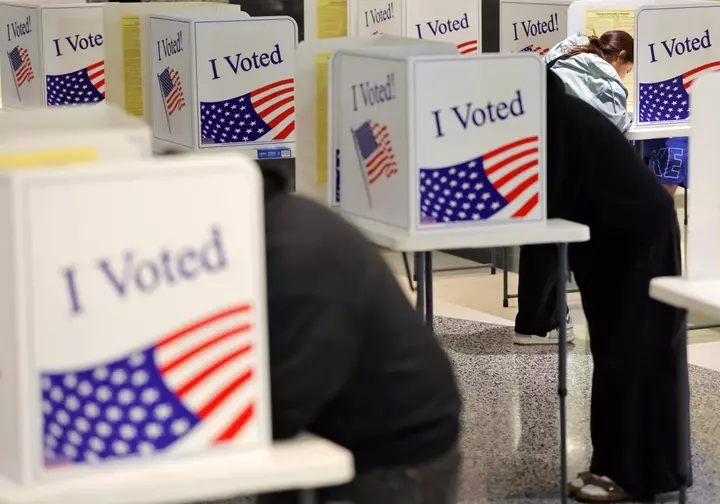
Voters in ten states weighed property tax relief and housing measures aimed at spurring construction and improving affordability on November 3, with most passing by overwhelming margins, according to the latest results. Housing affordability, which has recently been eroded by rising home prices, historically elevated borrowing costs, higher property taxes, and soaring homeowner insurance premiums, has emerged as a rare bipartisan issue this year, with the midterms confirming how eager Americans are for reform. With Democrats now in control of Congress after a series of stunning victories around the country, housing experts believe the party will be more generous than Republicans in spending money for housing programs whose funding was set to expire in December.
But the federal government’s power to boost housing supply, which experts have long identified as the root cause of the current affordability crisis, is limited. A lot more power is in the hands of the states—and in some, residents can expect some change soon thanks to the ballot initiatives they voted on Tuesday. Residents may not feel the benefits of these measures immediately, and their impact is likely to unfold gradually.
Still, they represent progress after years of limited action as housing affordability challenges intensified across the country. With 58 percent of the votes counted, according to the New York Times latest update, only two out of three housing measures on the ballot in California—Proposition 1, Proposition 37, Proposition 45—seem set to pass. Proposition 1, also known as the Veteran and Housing Assistance Programs Bond Measure, authorizes the state to issue $11.25 billion in bonds to fund income-qualified housing programs, including $1.25 billion for the state’s veteran home loan program.
As of Wednesday morning, 59.4 percent of voters backed the measure, while 40.6 percent had voted against it. Proposition 37, a citizen-initiated measure, authorizes the California Housing Finance Agency (CalHFA) to issue up to $25 billion in revenue bonds to fund a new down-payment assistance program offering fixed-rate mortgages to middle-income homebuyers who provide a down payment of at least 3 percent on qualifying new homes. With 58 percent of the votes counted, the measure was passing 61.0 percent to 39.0 percent.
Proposition 45, also known as the Expedited Environmental Review Process for Certain Projects Initiative, establishes deadlines for agencies to review applications and make permitting decisions; shorten or limit public agencies’ existing requirement to consider a range of project alternatives to reduce environmental impacts; and change the court review process for project approvals, limiting the occasions in which courts can delay or overturn them. As of Wednesday morning, with 57 percent of the total votes counted, 54.1 percent of votes counted were against the passing of the measure, while 45.9 percent were in favor. According to Chen Zhao, head of economics research at Redfin, Proposition 45 “would likely have the most direct impact on homebuilding” of the three initiatives.
The two initiatives, which seem bound to pass, “could be helpful to homebuyers as well," but "would not do as much to address the housing shortage and high home prices we see in California today,” Joel Berner, senior economist at Realtor.com, previously told Newsweek. In Hawaii, voters were asked to decide on Question 2, a constitutional amendment authorizing the state legislature to empower the counties and municipalities of the state to issue housing infrastructure growth bonds for specified public works, public improvements, and community development. With 77 percent of the votes counted on Wednesday morning, the measure was passing 63.2 percent to 28.8 percent.
Extract — continue reading at the source.