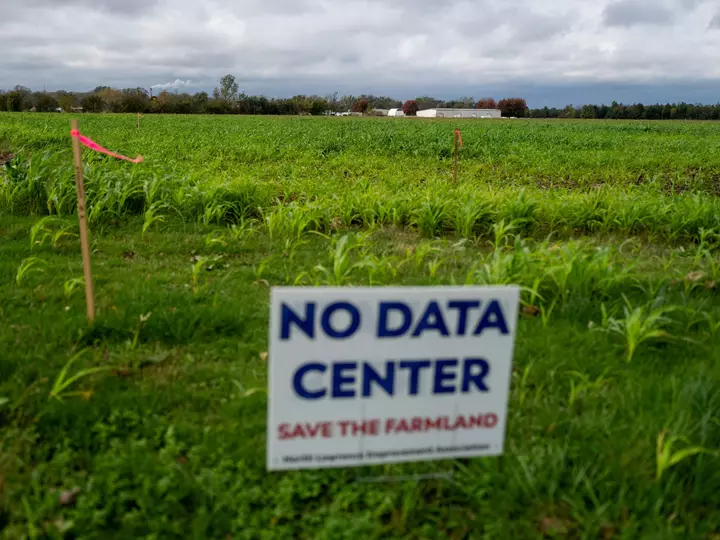
In September, a poll found that 70 percent of Democrats and 57 percent of Republicans supported limiting the construction of new data centres in the United States. But that opposition was tested in Tuesday’s midterm election, with analysts examining key races to see if the public backlash would translate into votes. There were 41 ballot measures related to data centres in Tuesday’s midterms, spread across the country.
According to Data Centers on the Ballot, an election-monitoring project run by Redbud Consulting, voters are on track to reject data centre development in all but one of the contests. Two of the races continue to be counted but are expected to result in majorities to reject or limit data centres. Only Harwood, North Dakota, a small town with a population of fewer than 800 people, voted to oppose such limits.
The measure it defeated would have required independent reviews of large industrial projects like data centres before they could be built in the area. Experts say Tuesday’s midterm elections indicate that the debate around data centres has become a bipartisan issue, intertwined with cost-of-living concerns and fears over job stability. As of April, the Pew Research Center estimated that there were already 3,000 data centres in the country, with more than 1,500 others in progress.
The construction boom has been driven in large part by the growth in the artificial intelligence (AI) sector. That industry, experts say, has fed concerns about a shifting economic landscape. But closer to home, people could see the physical manifestations of AI in data centres being built in their back yards, or they were hearing about it from others.” Not only are voters afraid that AI might replace human work, but they also fear the downstream costs of data centres, according to Chakravorti.
Data centres consume large amounts of water and energy, which critics say can drive up electricity costs for nearby communities. Voters, he added, were seeing the results “in their energy bills”. A 2026 working paper from the Federal Reserve Bank of Dallas estimated that, as of last year, wholesale electricity prices had risen by 6.9 percent as a result of data centres.
James Mercer, founder of Metro Colo Advisory, an independent data centre advisory firm, told Al Jazeera that those anticipated costs mobilised voters in many areas. Among them is Democrat Sherrod Brown, who flipped a key Senate seat in Ohio, the state that accounted for the largest share of data-centre ballot initiatives this year. Some 21 votes were taken on data centres in the state, out of a total of 47 referendums and measures that took place across the country in 2026.
Extract — continue reading at the source.