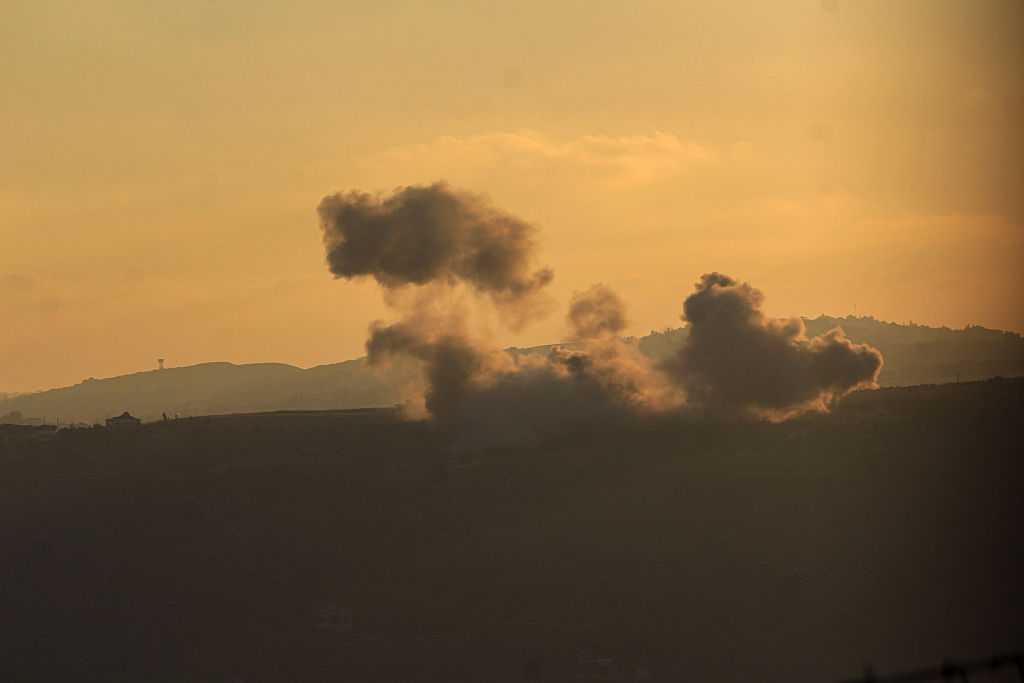
On Sept. 10, Israel destroyed Hezbollah’s underground command center and weapons stores beneath the Ali al-Tahir ridge in southern Lebanon, about 10 miles from the Lebanon-Israel border. The loss deprived Hezbollah of a fortified position and dealt another blow to Iran’s most important regional ally, which has lost senior commanders and much of its arsenal over the past two years. Farther south, another part of Iran’s regional network was gaining ground.
In Yemen, the Houthis seized territory along the Red Sea coast, bringing them closer to controlling the approaches to Bab al-Mandab, the passage connecting the Red Sea to the Gulf of Aden. The fall of Bashar al-Assad in Syria in 2024 and Hezbollah’s weakening have diminished Tehran’s influence in the Levant. Yet the wider war has created opportunities for Iran and its partners, particularly around the waterways indispensable for trade and energy exports.
Thus, Tehran is losing influence in one arena while acquiring new sources of leverage in another. Iran’s efforts to control passage through the Strait of Hormuz are only one part of the picture. The Houthis’ expanding reach in the Red Sea gives Tehran’s partners leverage over a strategic waterway, while Iran-aligned armed groups in Iraq can threaten oil pipelines built to bypass these maritime chokepoints.
For Iran’s neighbors, even the routes meant to provide an escape from one danger are exposed to another. Tehran remains under enormous military and economic pressure, but its setbacks in its traditional centers of influence have not ended its ability to impose costs elsewhere. In 2014, Yahya Rahim Safavi, a senior adviser to Iran’s then Supreme Leader Ali Khamenei, was at a conference of Iran-Iraq War veterans that was broadcast live on state television.
He spoke of Iran’s growing reach through Syria and Lebanon. Iran’s “strategic depth” had stretched to the Mediterranean coast and just to the north of Israel, he declared. Hezbollah’s arsenal and the supply corridor through Syria were central to Iran’s “forward defense,” a strategy intended to deter adversaries and keep conflicts away from Iranian territory.
The foundations of that strategy have since been severely weakened. Assad’s removal cost Tehran one of its few state allies and disrupted its ability to resupply Hezbollah, while Israeli operations diminished the group’s capacity to retaliate on Iran’s behalf. Subsequent attacks on Iran itself by Israel and the United States demonstrated the consequences: its regional partners could no longer be counted on to prevent a direct war.
Extract — continue reading at the source.