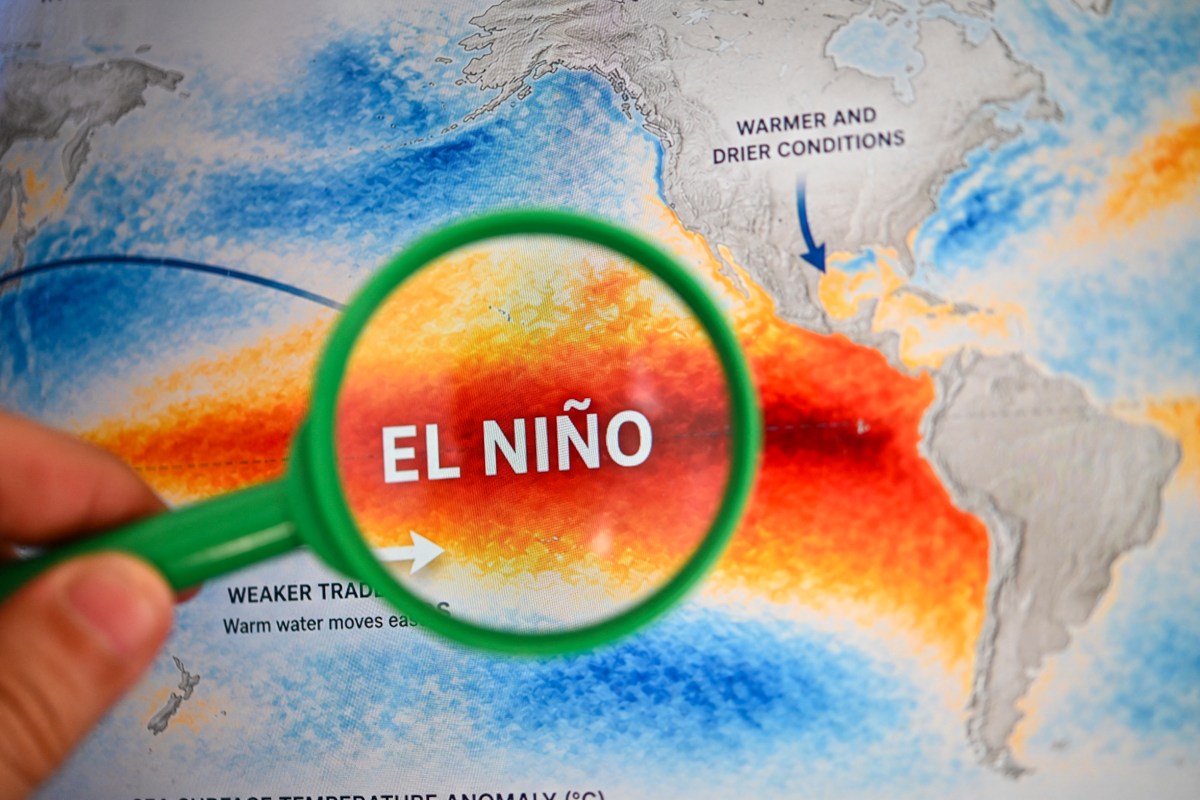
El Niño is strengthening across the tropical Pacific, with forecasters warning that the climate pattern could reach exceptional intensity and influence weather through the winter and into 2027. The National Oceanic and Atmospheric Administration’s (NOAA) Climate Prediction Center gives a greater than 90 percent chance of a very strong event during fall and winter, while the World Meteorological Organization (WMO) says El Niño is expected to reach very strong intensity before peaking near the end of 2026. AccuWeather says it is increasingly likely to become the strongest El Niño since at least 1950.
El Niño is the warm phase of the El Niño-Southern Oscillation, or ENSO, a recurring Pacific climate pattern that can affect weather worldwide. Its counterpart, La Niña, is the cool phase of the cycle. Typical El Niño effects can include stormier weather across the Southern U.S., drier conditions in some northern areas and changes in hurricane activity.
"Super El Niño" is not a formal NOAA classification. It is commonly used to describe an exceptionally strong event. "Over the next few months, the public should watch to see if El Niño continues to strengthen.
El Niño is measured in the ENSO 3.4 region which is a designated area in the Eastern Pacific where sea-surface temperatures are compared to climatology," AccuWeather meteorologist Alex DaSilva told Newsweek. "If we see a record El Niño, there is a very high likelihood that global temperatures in 2027 will be the warmest on record." In its August 13 discussion, NOAA’s Climate Prediction Center said El Niño was expected to continue strengthening through the end of 2026. It gave a greater than 90 percent chance of a very strong event during the Northern Hemisphere fall and winter of 2026-27.
For the October-to-December period, NOAA gave a 69 percent chance of a "historic" event that would exceed the strength of all previous El Niños dating back to 1950. NOAA cautioned that an event of this magnitude would increase the chances of El Niño-consistent effects, but said those effects were not guaranteed. The WMO said Thursday that El Niño was firmly established and expected to intensify into a very strong event in the coming months.
Forecasts from its Global Producing Centres showed a nearly 100 percent likelihood that El Niño would persist through February 2027, it said. The organization said exceptionally warm conditions across the tropical Pacific supported further strengthening, with El Niño expected to peak toward the end of 2026 and its climate effects to continue well into 2027. It also warned of potential changes in rainfall and temperature patterns, accompanied by risks of floods, drought and extreme heat.
Extract — continue reading at the source.