If you buy through our links, we may earn an affiliate commission. This supports our mission to get more people active and outside.Learn about Outside Online's affiliate link policy Jackery Explorer 1000 Portable Power Station Exped MegaMat LuxeWool Auto Sleeping Pad Cover I’ve always been jealous of people with a kitted-out Land Cruiser or a made-to-order Sprinter van. These #adventuremobiles not only look cool and bestow the driver with backcountry cred, but they also offer the freedom to roam without worrying about finding a place to pitch a tent.
Behind the wheel of one, you can venture into the unknown and, when sleepiness starts making your eyelids heavy, pull off the road for some fully prone shut-eye without even stepping outside. Even if you’re not pulling over at the last minute, these rigs serve as comfy, spacious home bases for drive-in campsites, getting rest before a big race, or road-tripping to a far-flung national park. They can be prohibitively expensive, rarely work well as daily drivers, and can be tricky to keep running smoothly.
Sleeping in my car comfortably always felt like a luxury I couldn’t afford—until this summer. In June, I bought a car for the first time in years. Like many outdoor-minded folks, I gravitated toward a small, capable crossover that promised competence on dirt roads alongside decent city gas mileage.
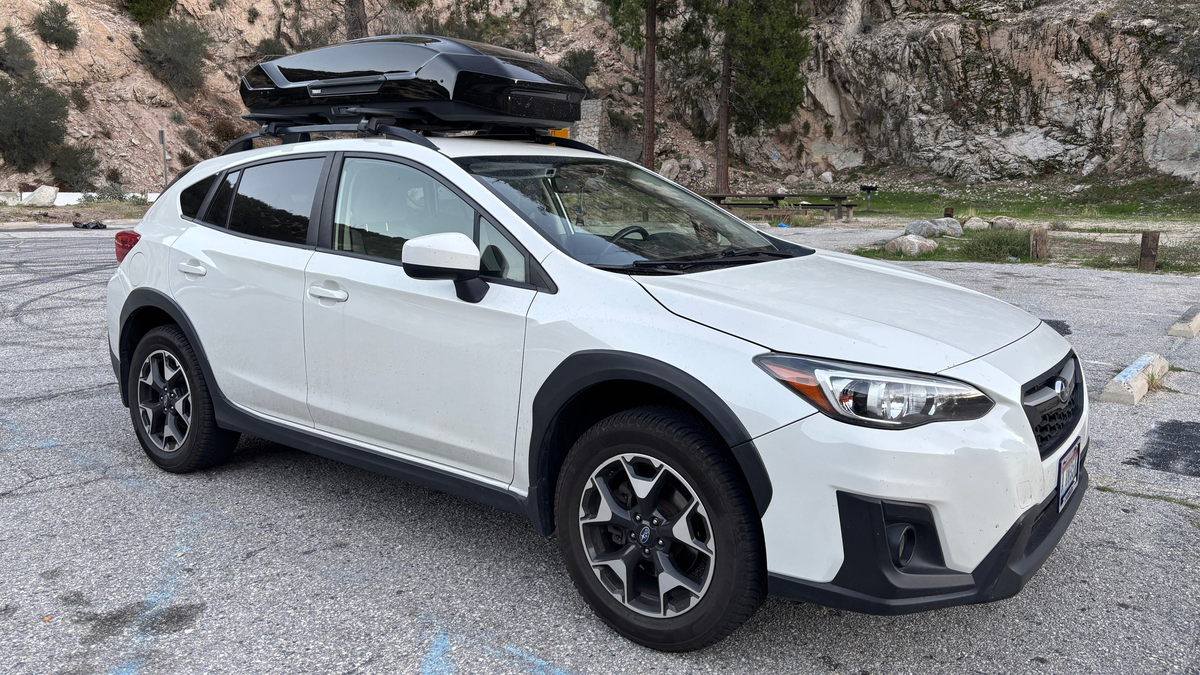
For me, that was a Subaru Crosstrek—a car I’ve wanted for nearly a decade. But it could have been an Outback, a Toyota RAV4, or any number of smaller utility vehicles. Since I’d be driving it daily in Los Angeles, the fuel economy and parkability made sense.
But I also knew I could take it off the beaten path to road-trip to Mammoth or explore the American West. What I wasn’t sure of was whether I could turn it into my own adventuremobile and spend a comfortable night sleeping inside. After some research and a few key car camping gear pick-ups, I can tell you that it is indeed possible to sleep in the back of my Crosstrek and fully stretch out my five-foot-ten frame—no scrunching or squishing necessary.
In fact, two people could sleep back there quite easily, which I didn’t anticipate when I drove it off the lot. I’ve found car-specific sleeping pads, easy-access roof boxes, and numerous other bits and bobs that make sleeping in the back of a compact car genuinely comfortable. Since June, I’ve dialed in a basic setup you can apply to just about any small vehicle.
Extract — continue reading at the source.