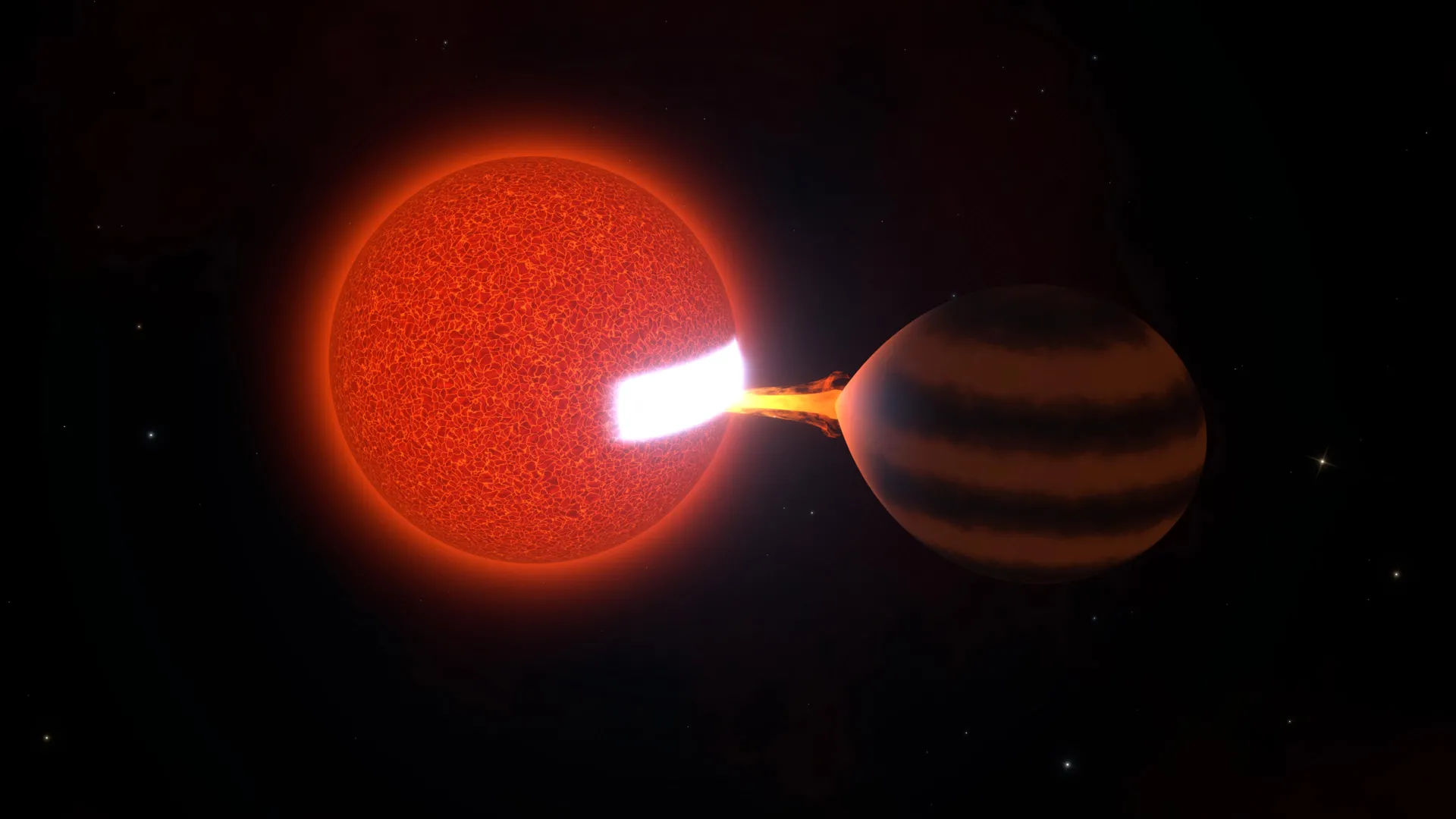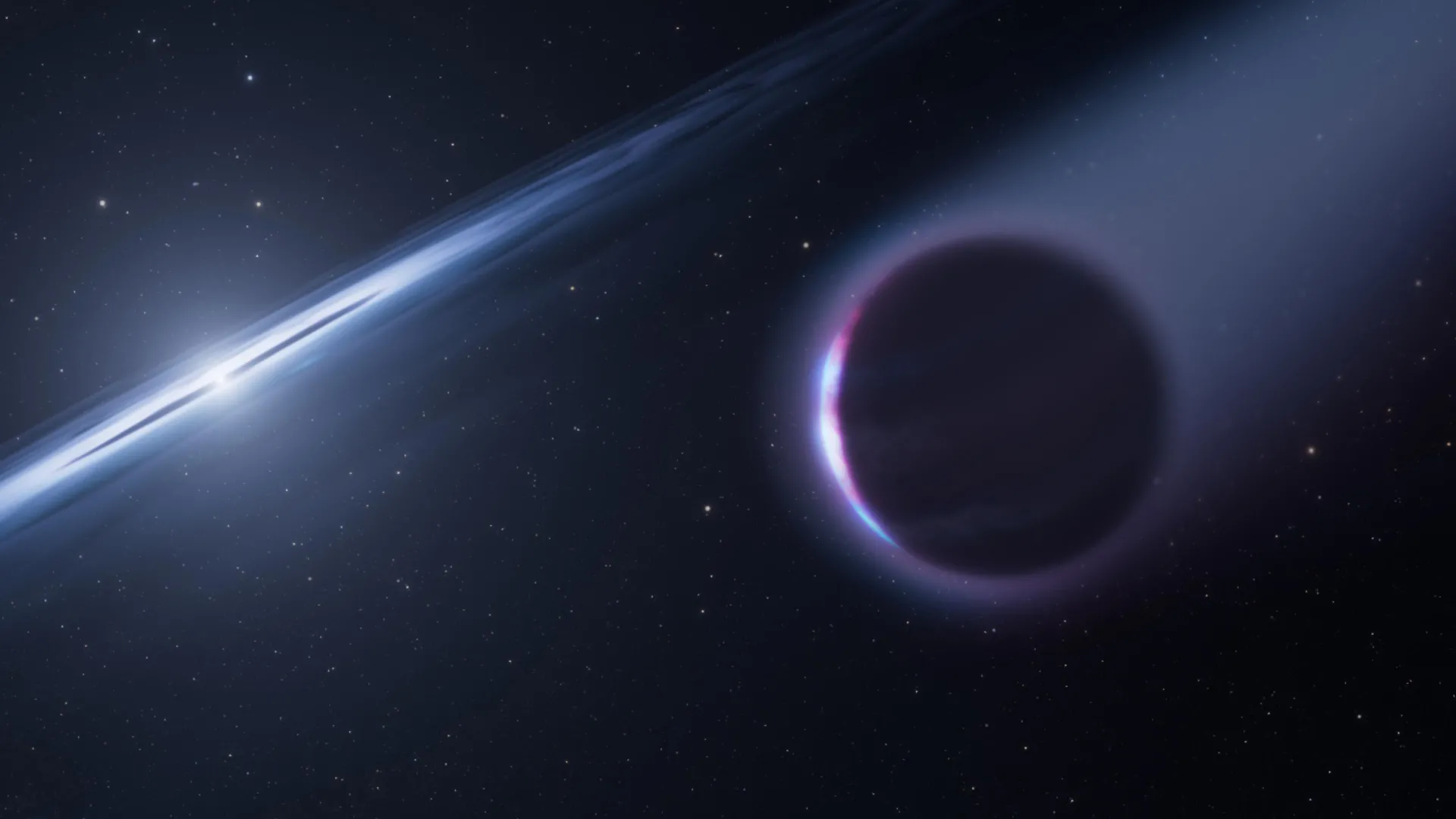
Astronomers revisiting decades-old observations from NASA's Hubble Space Telescope have found a new clue in a long-running cold case. According to a study published Oct. 5 in Nature Astronomy, an unusual chemical signature suggests that the white dwarf HS 0209+0832 could be home to a second-generation planet. A white dwarf is the leftover core of a low-mass star that has exhausted its nuclear fuel and shed its outer layers of gas and dust into space.
Unlike ordinary planets, which form alongside young stars, a second-generation planet takes shape later from material released by a dying star. "Rather than the white dwarf stage being a kind of epilogue to the story of a star and its planets, this research points to the systems we are familiar with only being the first chapter of a potentially much longer tale, with some new characters showing up. That's a really exciting prospect to pursue," said Jamie Williams, astronomer and lead author, a doctoral candidate at the University of Warwick in the United Kingdom.
Earth and the other worlds in our solar system are first-generation planets. They formed from material left behind during the Sun's birth. Hubble Finds a Strange Niobium Signature "What Hubble is showing us in this white dwarf system is something we haven't seen before: a high abundance of the element niobium, the signature of which I was unfamiliar with when I first found it in the archival data," Williams said.
Hubble observed HS 0209+0832 in 1999, but scientists at the time were unable to identify roughly 100 chemical features in the data. Williams returned to those observations using an updated chemical database and discovered that niobium accounted for many of the previously unexplained signatures. Niobium is present in our solar system and is also used on Earth in applications such as jewelry and medical imaging devices.
But Williams said the unusually large amount detected in the HS 0209+0832 system points toward a very different origin. Instead of coming from material associated with a star's birth, it may trace matter expelled during the star's death. "Niobium and other elements heavier than iron are astronomically special because, unlike many common elements, they are not formed in the cores of stars by thermonuclear fusion," said Nicholas Stone, a theoretical astrophysicist at the University of Wisconsin - Madison and member of the research team.
"Instead, these heavy elements can only be synthesized in the exotic conditions that briefly emerge inside dying stars. The presence of niobium is a signpost of these 'death' throes, and the expulsion of the dying star's innards into space." The researchers propose that after the star expelled this chemically enriched material, some of it gathered together and eventually formed a gas giant planet. Most of the remaining material would have dispersed into space long ago, while the planet remained in orbit.
Extract — continue reading at the source.