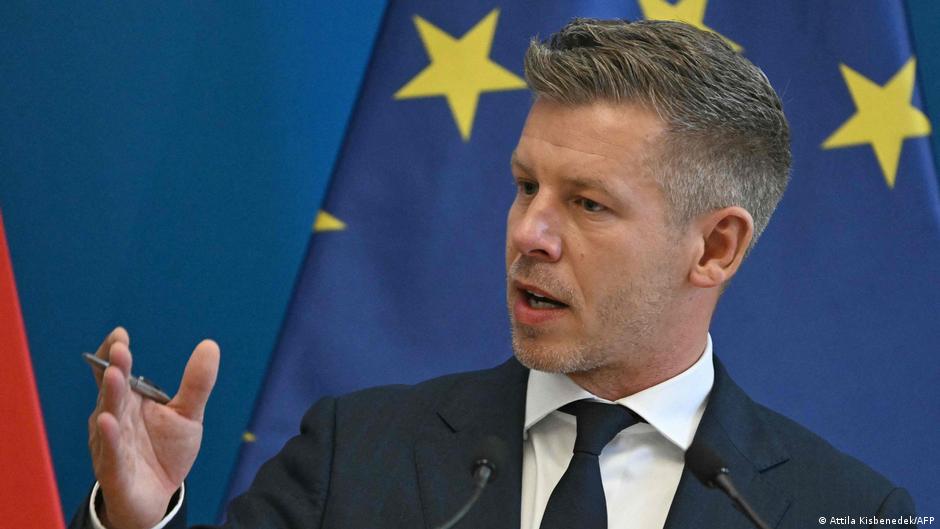
Asset recovery — it sounds bureaucratic but behind this phrase is one of the most important campaign promises made by Hungary's new government. Hungary's new prime minister, Peter Magyar, and his Tisza party want to retrieve funds and assets that went — in some dubious ways — to the family of ousted Hungarian leader Viktor Orban or his allies, various oligarchs, or frontmen. The new government wants those funds back for state use, and it also plans to hold the beneficiaries accountable under law.
Billions of euros were stolen or diverted and, if social media is to be believed, many Hungarians want to see the individuals responsible behind bars. Magyar has talked of a sum of around €60 billion ($70 billion), though other estimates suggest the real amount could be three times that much. Observers say the success or failure of the asset recovery will almost certainly influence the future of Magyar and the Tisza party.
The huge sums of money are linked to images of decadent luxury under Orban. The former Hungarian prime minister's family, party members, and friendly oligarchs lived on luxury estates, flew in luxury jets, vacationed on luxury yachts, and repeatedly won billions worth of public contracts. Orban-affiliated entrepreneurs, artists, academics, and journalists were also generously supported with public funds for years.
Often their main qualification was loyalty to the former prime minister. Those lifestyles contrasted with the lives led by Hungarians in poverty, the image of neglected public infrastructure, poor conditions in schools and hospitals, and the exodus of many young Hungarians from the country, as well as a huge deficit in the state budget, some 7.5% of Hungary's national income. These contrasts explain why there is such a popular desire for justice.
It's been almost four months since the new Magyar government took office and anti-corruption actions have officially started. At the end of July, the new government established the National Asset Recovery Authority, or NVVH — a sort of "super institution" with very broad powers and independence. Hungary hasn't had an authority like this in its modern history.
The way state assets were privatized in the 1990s after communist rule was problematic, as it often was elsewhere in the former Soviet bloc. When Orban first came to power in 2010, there was a half-hearted attempt to address the corruption of the previous government under Ferenc Gyurcsany, but it came to nothing. To view this video please enable JavaScript, and consider upgrading to a web browser that supports HTML5 video This time, things are meant to be different.
Extract — continue reading at the source.