If you buy through our links, we may earn an affiliate commission. This supports our mission to get more people active and outside.Learn about Outside Online's affiliate link policy How We Reported This: The author has chronic back pain, but she’s not ready to give up backpacking. Instead, she’s editing her kit to include lightweight backpacking gear, from her Mountain Hardwear Alakazam 45L pack to her Exped Ultra 6.5R sleeping pad, to make overnight trips more manageable and comfortable.
A combination of old injuries, a couple car accidents, working most days at a desk, and stress I tend to carry in my body has left me with chronic upper back, neck, and shoulder pain. On my worst days, I can hardly turn my head from side to side, and a sharpness radiates from my shoulder blades to the base of my skull. Flare-ups like these can make the idea of shouldering a heavy backpack over many miles and sleeping on the ground sound like the death of me.
Despite it all, I’ve never considered giving up backpacking (or my other outdoor hobbies) because of my back. Instead, as I’ve gotten older, more prone to injury, and less tolerant of pain, I’m paying closer attention to how much weight I’m carrying (and my posture). The ultralight lifestyle isn’t entirely for me—what do you mean my 500-page novel is discouraged?—but I’m taking a page out of the UL book and looking for lightweight backpacking gear that reduces backpacking’s impact on my body to make time on the trail more comfortable.
As I’ve whittled down my backpacking kit, I’m aiming to drop my base weight from about 22 pounds to 15 without sacrificing support or comfort. That means swapping in lighter gear where I can and making room for a recovery tool to ease back pain after long days on the trail. My previous backpacking pack weighed close to 4 pounds.
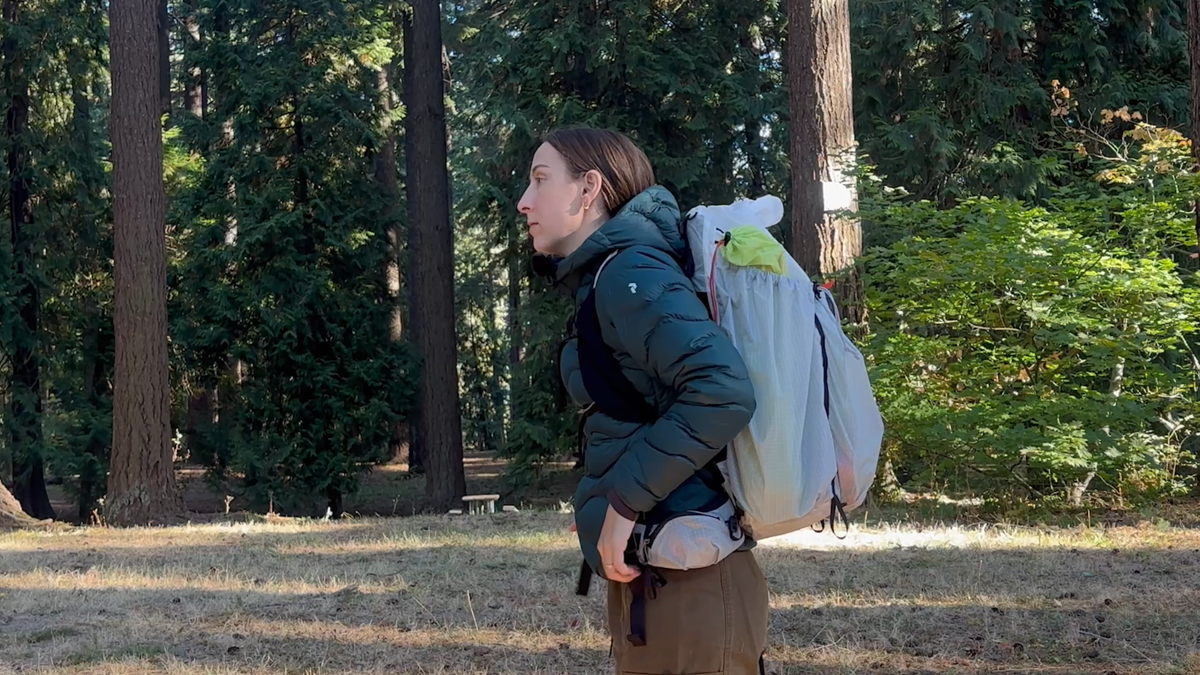
The Mountain Hardwear Alakazam 45L weighs just under 2 pounds but still has all the features I want in a backpacking pack, such as a sturdy and supportive aluminum frame. The frame attaches to the hip belt at the center back for even weight distribution, and the load lifters and GiddyUp Compression System help cinch the load. Weight savings come from the zipperless design—the roll-top opening is wide and easy to pack and unpack—and the waterproof ALUULA Graflyte V78 shell fabric.
Unlike Dyneema, ALUULA bonds ultra-high-molecular-weight polyethylene fibers to a polymer film without adhesives, making it more resistant to delamination, abrasion, and tearing. A large front stash pocket and two oversized, dual-entry water bottle side pockets offer plenty of storage (though reaching behind my back for a bottle is awkward without taking off the pack or asking for help). For backpacking with back pain, I’ve found that the running vest-style straps keep the load close to my body and help distribute weight across my chest, rather than concentrating pressure on my shoulders.
Extract — continue reading at the source.