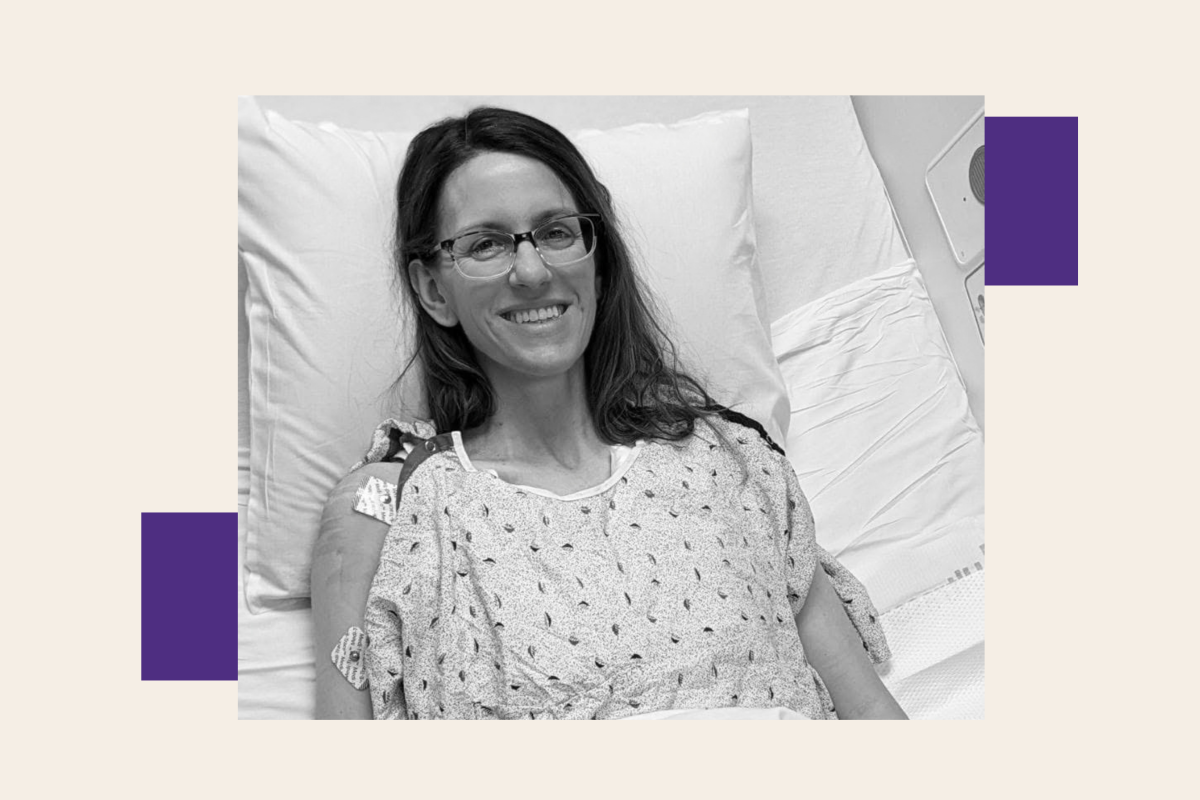
One afternoon in early December, when I was 42 years old, I got a call from my local hospital. I’d just had a mammogram—my second ever—and the kind woman from the radiology department told me that they wanted me to come back for further imaging. I’d heard this was common; I’d even had a small lump biopsied years before.
I told her sure, no problem. That’s when I started to get worried. I didn’t get the pathology results for two more weeks.
But after the ultrasound, I knew. Ultrasound reports are given a score from 0 to 6; no cancer to definitively cancer. A score of 5 means a 95% or higher chance of malignancy.
The diagnosis was completely unexpected. I was a vegetarian and a runner, with no family history; I’d had a clear mammogram the year before. The only time I’d even had anesthesia was to get my wisdom teeth out.
Over the next several months, I went through two major surgeries, and I’m now in the middle of a five-year course of hormone-blocking drugs with side effects like hot flashes, brain fog and joint pain. And I know I’ll always be scared that it’s going to come back. In the 2 ½ years since my diagnosis, there’s been a spate of stories about people faking cancer.
Amanda Riley, made famous by the podcast Scamanda, who collected money and well-wishes from supporters during her “cancer battle.” Belle Gibson, subject of the Netflix series Apple Cider Vinegar, who built a wellness empire on claims that she’d treated her (nonexistent) brain cancer through natural remedies. Elisabeth Finch, a writer for Grey’s Anatomy, who faked a cancer diagnosis for years and pitched multiple storylines “inspired” by her experience. I’ve followed these stories with fascination.
Extract — continue reading at the source.