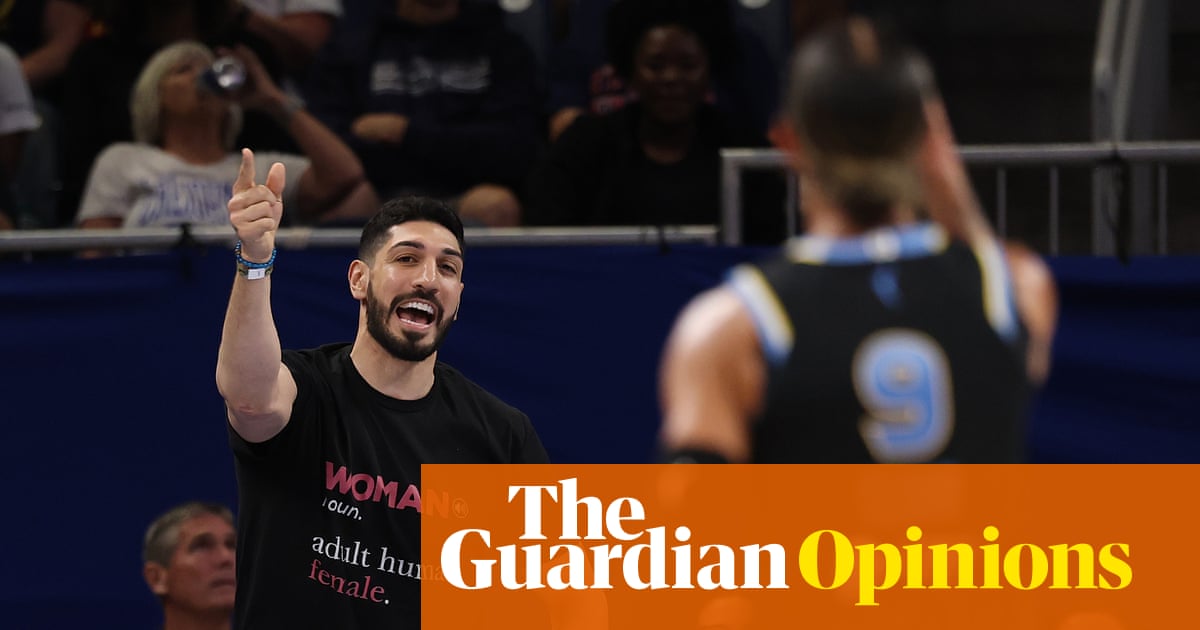
Nine years ago, I watched Enes Kanter ask America to take him in. It was May 2017, inside the National Basketball Players Association’s offices in midtown Manhattan. Kanter had just returned from a frightening detention at Bucharest airport, where Romanian border police told him Turkey had canceled his passport.
He’d just turned 25, an NBA center with a green card and no country he could safely call home. Then he turned serious: “My next move is to just become an American citizen.” The previous 48 hours had unfolded like a John le Carré thriller. Kanter said his manager woke him at 2.30am in Jakarta because Indonesian security forces were looking for him.
He hurried to Singapore, then Frankfurt, only to be stopped in Romania. He feared being sent to Turkey, where he had grown up and whose national team he had represented. There, he said, no one might hear from him again.
Department of Homeland Security officials and lawyers for the Oklahoma City Thunder and the players’ union helped get him back to the United States. Sitting in that room that Monday morning, I saw someone who had already paid a steep cost for the right to speak truth to power. Kanter called Recep Tayyip Erdoğan the “Hitler of our century”.
He recounted daily death threats, a family placed in jeopardy by his opposition to Erdoğan and support for the president’s exiled rival, Fethullah Gülen, and parents he had stopped calling because he feared the government was tapping their phones. He said his father had been spat on at a supermarket. The reprisals only widened.
Turkey issued warrants for Kanter and later sought an Interpol Red Notice and his extradition. He skipped NBA trips abroad, including a Knicks game in London, because he feared detention or assassination. His father, Mehmet, a university professor, was dismissed, detained and charged with membership in a terrorist organization before his eventual acquittal in 2020.
Extract — continue reading at the source.